Menu · 1 component
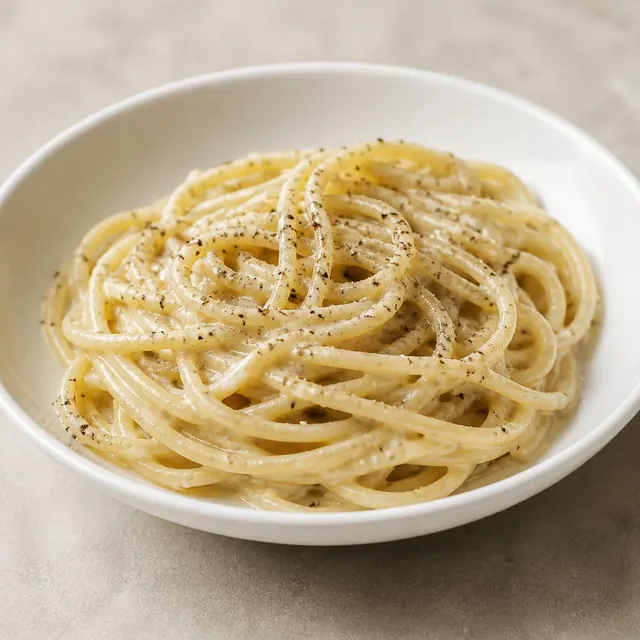
Spaghetti cacio e pepe
Roman spaghetti with a cream of Pecorino Romano and freshly cracked black pepper; a complete main course.
Menu portion25 min407 kcal per menu portion
- Good for lunch
- Good for dinner
1Main course
Spaghetti cacio e pepe
407 kcal per menu portion · 1 × recipe portion per menu portion
- Low in lactose
Contains: Gluten, Milk · May contain: Egg
Quantities for the whole recipe (4 servings).
Ingredients
- 320 gPasta, dry, unenriched
- 110 gCheese, romano
- 6 gSpices, pepper, black
- 680 mlBeverages, water, tap, drinking
- 1.3 lBeverages, water, tap, drinking not counted – removed
- 1 gSalt, table editorial addition
Method
- Grate the pecorino as finely as possible (on a fine rasp) into a bowl. Toast the whole peppercorns in a dry pan for 1–2 minutes until fragrant and crush them coarsely in a mortar.
- In a wide pot bring just 2 litres of water with 10 g of salt to the boil (less water means more starch, and the pecorino is salty) and cook the spaghetti 1–2 minutes less than the packet says.
- Meanwhile put half the pepper into a frying pan, add 100 ml of pasta water and let it bubble briefly. Into the pecorino in the bowl, add about 100 ml of pasta water a little at a time, left to cool for a minute or two (lukewarm to warm, not boiling), and work it with a spatula or whisk into a thick, smooth cream; there should be roughly equal amounts of cheese and water.
TipMelting cheese into sauceCheese melts blissfully into a warm sauce, but in a boiling one it sulks: it balls up into rubber and sheds its fat.Why and howShow less
Why
Cheese is a network of the milk protein casein that holds fat and water in place. Gentle heat softens the fat and loosens the network so the cheese flows smoothly; overheat it, though, and the proteins tighten into rubbery clumps and squeeze out fat that ends up floating on top. Hard, aged cheeses with little moisture cope worst, young supple cheeses melt more willingly, and grated cheese melts quickly and evenly, so it has no time to overheat. Starch – from flour in the sauce base or dusted over the cheese – gets in between the proteins and fat droplets and stops them clumping; acid from wine or lemon binds the calcium that holds the casein network together, which is why cheese fondue is made with wine.
How to do it
- Grate the cheese finely and let it come to room temperature.
- Before adding the cheese, take the sauce off the heat or turn the heat to minimum; it must no longer bubble.
- Add the cheese a handful at a time and let each one melt before adding the next.
- Use a sauce thickened with roux as the base, or toss the grated cheese with a teaspoon of starch beforehand.
- Add a splash of white wine or a few drops of lemon juice to a cheese sauce without flour.
- Once the cheese has melted, don't boil the sauce again; just keep it warm.
If it goes wrong
Take a slightly grainy or greasy sauce off the heat, add a few drops of lemon juice or a spoonful of cold cream and whisk hard or use a stick blender. A teaspoon of starch mixed with a little cold water or wine works more reliably: stir it in and warm the sauce briefly, stirring constantly, until it comes together. Cheese that has seized into a rubbery ball won't melt smoothly again – fish it out, and next time grate finely and melt over lower heat.
- Lift the spaghetti with tongs into the pan with the pepper and toss over low heat for a minute so they finish cooking and release starch. Take the pan off the heat, let it cool for about half a minute, add the pecorino cream and toss quickly, with a spoonful of pasta water if needed, until a glossy, creamy sauce forms. The cream must not go above roughly 65 °C, otherwise the cheese proteins clump and the fat separates.
- Serve at once, sprinkled with the remaining pepper.
Allergens
Contains: Gluten, Milk
May contain: Egg
Derived from ingredients – check the package label.
Nutrition, allergens and calories are for the default choice – the first alternative of every slot.
Nutrition per menu portion
Per serving
- Protein19.3 g19%
- Fat8.7 g20%
- Total carbohydrate (by difference)61.7 g61%
Share of energy from protein, fat and carbohydrate (4 / 9 / 4 kcal per g), not share by weight.
- Energy
- 407 kcal
- Protein
- 19.3 g
- Fat
- 8.7 g
- Total carbohydrate (by difference)
- 61.7 g
- Total dietary fibre (USDA)
- 2.9 g
- Saturated fatty acids
- 4.9 g
- Sodium
- 502.9 mg
- Salt (sodium × 2.5)
- 1.3 g
Per 100 g
- Energy
- 162.8 kcal
- Protein
- 7.7 g
- Fat
- 3.5 g
- Total carbohydrate (by difference)
- 24.7 g
- Total dietary fibre (USDA)
- 1.2 g
- Saturated fatty acids
- 2 g
- Sodium
- 201.1 mg
- Salt (sodium × 2.5)
- 0.5 g
A dash means the value is unknown, not zero. Salt is calculated from sodium (g salt = mg sodium × 2.5 / 1000) and includes sodium from all ingredients.
Calculation limitations
- Nutrition is a calculated estimate, not a laboratory measurement.
- Some ingredient quantities use documented estimates or household-measure assumptions.
- The number of servings is an editorial estimate (midpoint of the source range or based on the dish type and energy).
- Fibre, saturated fat and sodium of cooked ingredients are estimated from the consumed ingredient amounts; for drained ingredients, sodium is included only where the retained amount is an explicit editorial estimate.
- Some process effects could not be resolved in this calculation.
- Menu nutrition is the sum of its component recipes, each scaled to one menu portion.