Kitchen terms · French cuisine
Chiffonade (chiffonnade)
Leaf vegetables or herbs cut into very thin ribbons, served raw or stewed in butter.
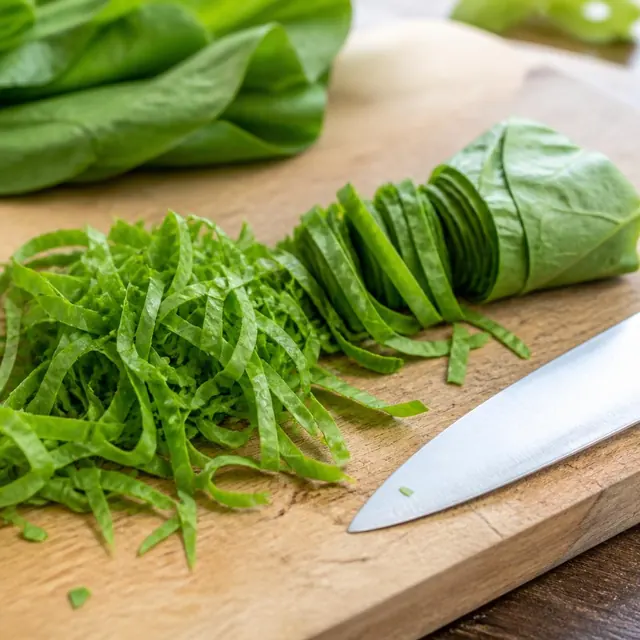
At a glance
- Origin
- France; according to the TLFi a formation with the suffix -ade, French spelling chiffonnade.
- Production
- Leaves without ribs are pressed together tightly and cut into thin ribbons.
- Use
- Garnish for soups and consommés, herb garnish, leaves raw or stewed in butter.
- Substitutes
- Julienne means sticks of firm vegetables, chiffonade ribbons of leaves.
Chiffonade, in French chiffonnade, denotes leaves cut into fine ribbons. Larousse lists sorrel or lettuce leaves used as a garnish either raw or “melted” in butter, and by extension other finely cut food served in scattered pieces, such as a chiffonnade of ham. The Trésor de la langue française classes the word under the suffix -ade.
In his 1907 guide Escoffier describes a chiffonade of sorrel or lettuce as a complement to soups such as “Potage de santé”, “Germiny” or clear consommés. The leaves are stripped of their ribs, washed, squeezed tightly and cut with a sharp knife into fine strips. The Cambridge Dictionary now applies the word broadly to vegetables or herbs, typically basil, cut into narrow strips as a garnish.