Cheese and charcuterie · French cuisine
Comté
Hard cheese from the Jura mountains, made from raw milk of Montbéliarde and French Simmental cows.
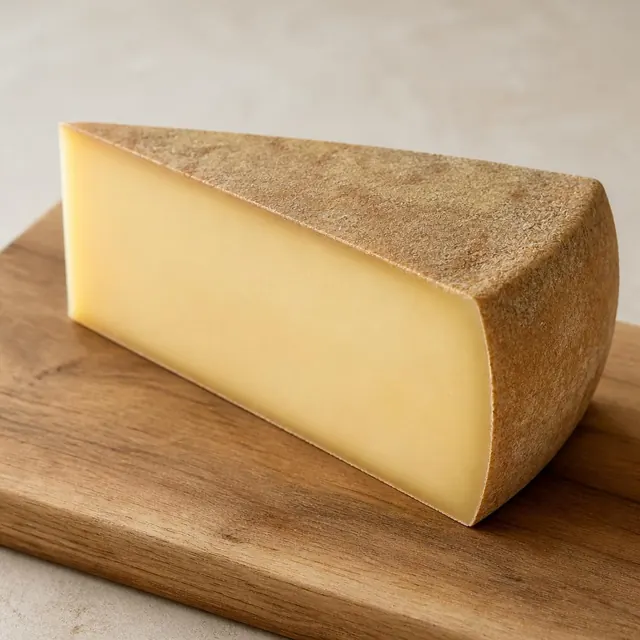
At a glance
- Origin
- Jura massif: Doubs, Jura and part of Ain; PDO (AOC since 1958).
- Milk
- Raw cow’s milk from Montbéliarde and French Simmental cows.
- Ageing
- At least 4 months, about 8 months on average, even beyond 24 months.
- Use
- On its own; grated over baked dishes.
- Substitutes
- Le Gruyère, also a hard raw-milk cheese; the taste is different, though.
Comté is a French hard cheese with a designation of origin – AOC since 1958, PDO since 1996. It comes from the Jura massif, from the Doubs and Jura departments and part of Ain, at altitudes of 200–1,500 m. Only Montbéliarde and French Simmental cows may supply the milk, and each cow must have at least one hectare of pasture.
It is made exclusively from raw cow’s milk in more than 150 small village dairies called fruitières; it is a pressed, cooked-curd cheese. An average wheel weighs about 40 kg and measures around 60 cm across. It ages in the cellar for at least four months (120 days), about eight months on average, and selected wheels for 12–24 months or more.
It differs from Swiss Le Gruyère in its area, cow breeds and ageing rules. It is eaten on its own and grated over baked dishes.