Kitchen terms · French cuisine
Concassé (tomates concassées)
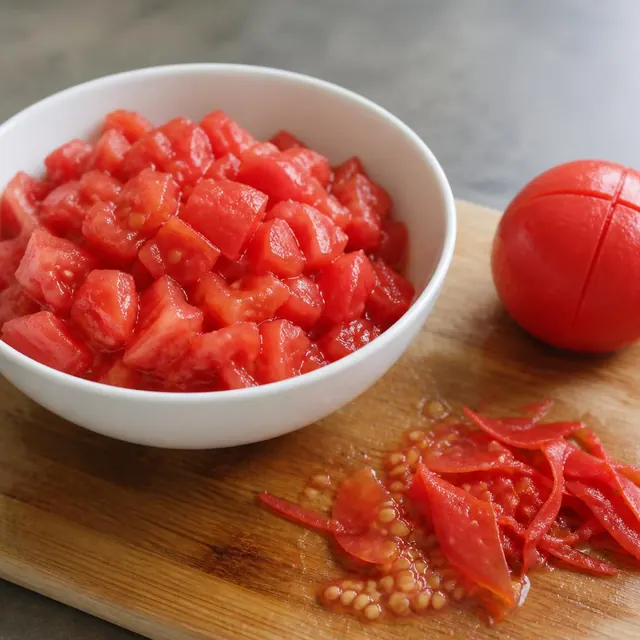
A roughly chopped ingredient, in the kitchen most often tomatoes peeled, seeded and cut into pieces.
At a glance
- Origin
- French concasser from Latin conquassare, to break; recorded in 1393.
- Production
- Tomatoes are peeled, seeded, pressed and roughly chopped.
- Use
- Escoffier: concassed tomatoes stewed in butter as a garnish or on toast.
- Substitutes
- Tomato fondue, in Escoffier’s terms, is cooked down to a pulp.
According to the Trésor de la langue française, the verb concasser means to break hard, dry substances into small fragments; it is recorded from 1393 as conquasser and comes from Latin conquassare, to shake violently and hence to break. In cooking the term is applied to tomatoes (tomates concassées); Escoffier also roughly chops parsley, chervil or pepper this way.
In the glossary of the 1907 English edition of his guide Escoffier renders concasser as “to chop roughly”. For tomatoes he instructs to peel them, remove the seeds, press them and chop them roughly; tomatoes prepared this way are, for example, stewed in butter. In the same glossary he separately defines fondue as the pulpy state to which tomatoes, sorrel and similar vegetables are reduced by cooking.