Flours and grains · International
Sushi rice
Short-grain non-glutinous japonica rice that holds together when cooked; the best-known variety is Koshihikari.
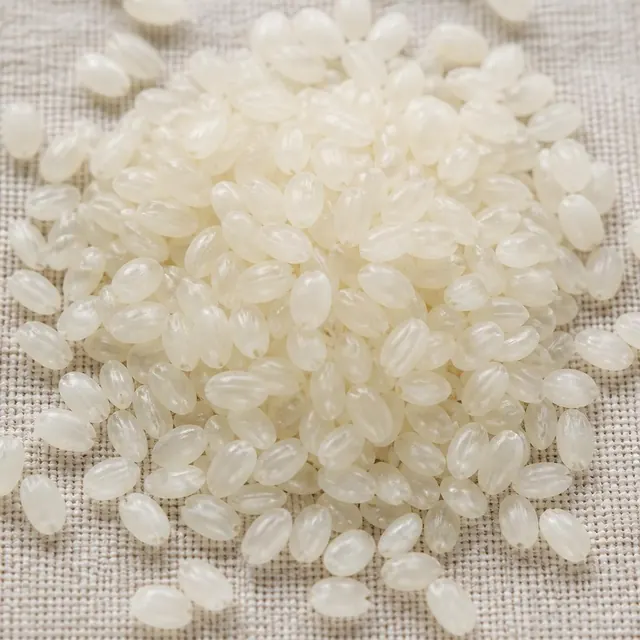
At a glance
- Origin
- Japan and East Asia; short-grain non-glutinous japonica rice, e.g. the Koshihikari variety.
- Production
- Rinsed, soaked and cooked by absorption under a lid.
- Use
- Sushi, onigiri, Japanese side dish.
- Substitutes
- Other short-grain japonica rice; not glutinous rice.
Sushi rice is short-grain japonica rice, the most common rice in East Asia, including Japan. It is not glutinous rice: it belongs to the non-glutinous varieties, whose starch contains amylose as well as amylopectin. For sushi a small, round grain with a slightly sweet taste is wanted – one that holds its shape and coheres well without turning dry or gluey.
The best-known Japanese variety is Koshihikari, which has dominated rice growing in Japan since 1979 and is among the most prized for sushi. About 300 varieties are grown in Japan in total, differing in stickiness, hardness and sweetness.
The rice is rinsed and soaked before cooking; soaking is an important step in the Japanese takiboshi method. It is cooked under a lid until the grains have absorbed all the water, which leaves a thin film of starch on the surface of the grains.
Techniques and tips
Related entries
Sources
- J-STAGE, Reviews in Agricultural Science: Ohmoto a kol., Function of Carbohydrate-Related Endogenous Enzymes in Milled Japonica-type Non-glutinous Rice (2025)
- JA Zen-Noh: Japanese rice – varieties and characteristics
- Altroconsumo: Riso – come scegliere le varietà in base all'uso
- FAO/IRRI, B. O. Juliano: Rice in human nutrition, kap. 3 Grain structure, composition and consumers' criteria for quality (1993)