Cheese and charcuterie · Italian cuisine
Grana Padano
Hard cheese from the Po Valley: silage and lysozyme allowed, on sale only after nine months.
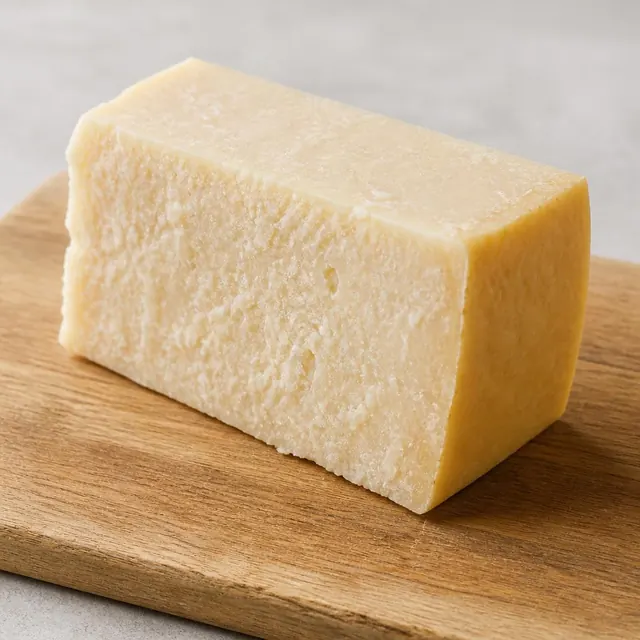
At a glance
- Origin
- 32 provinces in five regions of northern Italy; PDO.
- Milk
- Raw cow’s milk, partly skimmed; feed may include silage.
- Ageing
- Sold from 9 months at the earliest; categories Oltre 16 mesi and Riserva (at least 20 months).
- Use
- Table cheese, or grated over pasta, risotto and soups.
- Substitutes
- Parmigiano Reggiano, which ages longer and is made without silage or lysozyme; the flavour of the dish shifts.
Grana Padano is a PDO hard cheese from 32 provinces in Piedmont, Lombardy, Veneto, Emilia-Romagna and Trentino-Alto Adige. It is made all year round from raw cow’s milk, partly skimmed by natural creaming; the curd is cooked and the cheese matures slowly.
Unlike Parmigiano Reggiano, the cows may be fed silage. To prevent the faulty fermentation that silage encourages, lysozyme from egg white may be added, up to 2.5 g per 100 kg of milk; the Trentingrana type uses neither silage nor lysozyme. Wheels weigh 24–40 kg and may only be sold as Grana Padano once they are nine months old. Optional categories are “Oltre 16 mesi” and “Riserva”, aged for at least 20 months.
It is eaten as a table cheese and grated over pasta, risotto and soups.