Cheese and charcuterie · Italian cuisine
Pecorino Romano
Hard cheese from whole sheep’s milk, today mostly from Sardinia – the salty bite of Roman pasta.
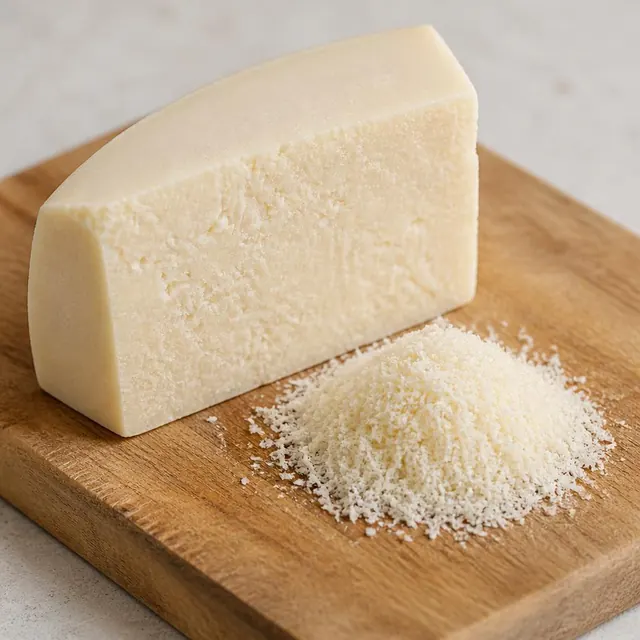
At a glance
- Origin
- Lazio, Sardinia and the province of Grosseto; PDO; about 92% made in Sardinia.
- Milk
- Fresh whole sheep’s milk, may be thermised.
- Ageing
- At least 5 months as a table cheese, at least 8 months for grating.
- Use
- Grated into carbonara, gricia, amatriciana and cacio e pepe.
- Substitutes
- Another hard sheep’s-milk pecorino; Parmigiano Reggiano is a cow’s-milk cheese and changes the Roman classics.
Pecorino Romano is a PDO hard cheese made from fresh whole sheep’s milk. The production area covers all of Lazio, Sardinia and the province of Grosseto. It is named after the Roman countryside, but from the late 19th century production spread to Sardinia, which now makes about 92% of the total.
The milk may be thermised; it is curdled with lamb rennet paste at 38–40 °C and the curd is cooked at 45–48 °C. The cylindrical wheels of 20–35 kg are salted dry or in brine. As a table cheese it ages for at least five months and tastes aromatic and slightly sharp; the grating cheese ages for at least eight months and is distinctly sharp. The paste is white to straw-coloured and compact.
It differs from Parmigiano in its sheep’s milk and sharper taste. Roman cooking grates it into carbonara, gricia, amatriciana and cacio e pepe.