Cheese and charcuterie · Italian cuisine
Guanciale
Salted, spiced and aged pork cheek and jowl – the rich base of carbonara, gricia and amatriciana.
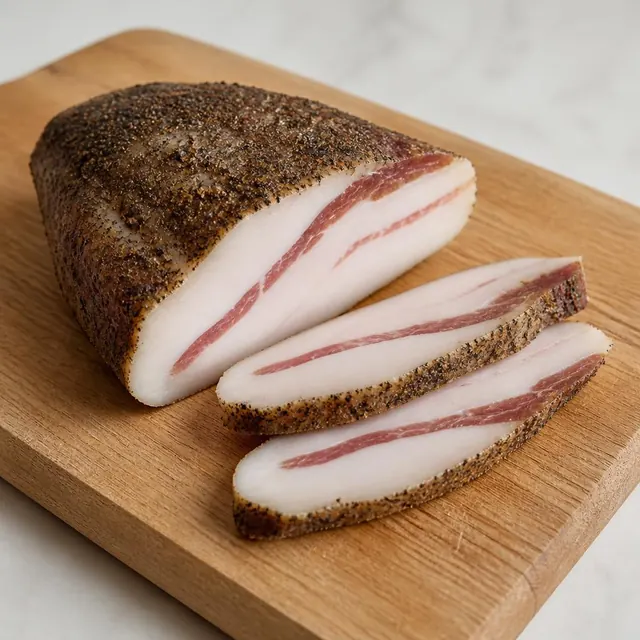
At a glance
- Origin
- Lazio and neighbouring Abruzzo (Amatrice, Campotosto); traditional product PAT.
- Cut
- Pork cheek and jowl, a triangular piece with rind.
- Ageing
- Salted and seasoned, dried and aged for about 1–4 months; usually unsmoked.
- Use
- Rendered into gricia, amatriciana and carbonara.
- Substitutes
- At a pinch unsmoked pancetta from the belly; in the Roman classics the swap changes the dish.
Guanciale is an Italian cured meat made from pork cheek and jowl (guancia). In Lazio it is listed as a traditional product (PAT); it was made mainly in the provinces of Frosinone, Viterbo and Rieti, and guanciale amatriciano comes from around Amatrice and Campotosto.
Within 24 hours of slaughter the trimmed cheek is salted and seasoned – depending on the area with pepper, chilli, garlic, wild fennel or wine. Excess salt is removed, the meat is dried for a few days and aged for about 30–45 days, at most 120 days. Classic guanciale is not smoked, though some Lazio producers briefly smoke it over juniper before sale. The piece is triangular, weighs roughly 1–1.5 kg and is mostly white fat with red meat.
It differs from pancetta, made from the belly, in the cut. Cut into strips and rendered, it forms the base of gricia, amatriciana and carbonara together with pecorino.