Cheese and charcuterie · Italian cuisine
Pancetta
Salted and spiced pork belly – flat tesa, rolled arrotolata or smoked affumicata.
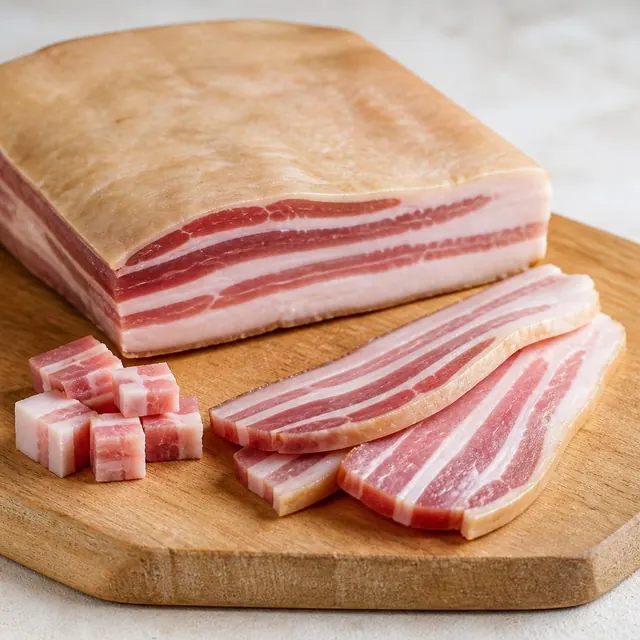
At a glance
- Origin
- All of Italy, with regional variants (e.g. Lazio, Lombardy).
- Cut
- Pork belly, the belly and rib section.
- Ageing
- Salted, seasoned and aged; arrotolata ages longer than tesa, affumicata is also smoked.
- Use
- Diced into ragù alla bolognese and sauces; thin slices on their own.
- Substitutes
- At a pinch unsmoked streaky bacon; a smoked one changes the taste of a ragù.
Pancetta is an Italian cured meat made from pork belly (pancia), with layers of fat alternating with thin layers of meat. A description of the traditional product from Lazio names the belly and rib section of pigs slaughtered at 120–150 kg live weight; Lombardy has its own regional pancettas too.
The belly is trimmed, salted and seasoned with pepper, chilli, garlic, nutmeg, wine or ground fennel seed. Pancetta tesa stays flat with its rind, ages for a shorter time and is usually more heavily spiced; arrotolata is rolled with or without rind, spiced inside and aged longer. Pancetta affumicata is smoked, in the province of Frosinone over juniper wood. The cut surface is pinkish white with stripes of fat and meat.
It differs from guanciale, made from the cheek, in the cut. Diced, it is browned as the base of ragù alla bolognese; thin slices are also eaten on their own.