Sauces · Italian cuisine
Gricia
The shepherds’ sauce of guanciale, pecorino and pepper – “amatriciana without tomato” and root of the Roman family.
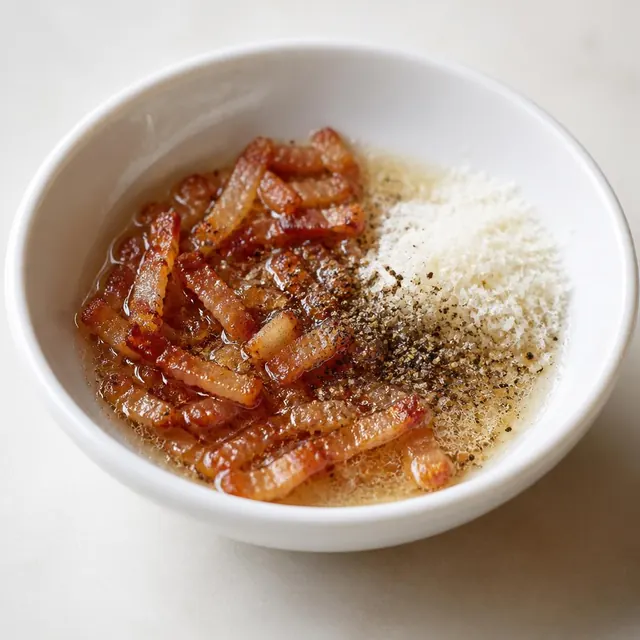
At a glance
- Origin
- Grisciano near Accumoli (Lazio), shepherd cooking of the Monti della Laga.
- Production
- Rendered guanciale with white wine, pasta tossed in the fat, pecorino and pepper.
- Ratio
- Guanciale 10–30%, olive oil at most 5% of the finished sauce.
- Pairs with
- Short or long durum-wheat pasta; in Rome often rigatoni.
- Use
- Add tomato for amatriciana, egg for carbonara.
Gricia (also griscia) is a sauce of rendered guanciale, pecorino and black pepper, or chilli, without tomato. Tradition links it to the hamlet of Grisciano near Accumoli on the old Via Salaria salt road, and to shepherds who carried only long-keeping foods while moving their flocks: guanciale, pecorino, dried pasta and pepper.
Rindless guanciale is cut into strips, rendered slowly in a little oil, deglazed with white wine and lifted out once golden. The cooked pasta is then tossed in the pan with the fat and guanciale and served with pecorino and pepper.
Lazio’s regional agency regards it as the forerunner of amatriciana, which added tomato. Carbonara shares the same base and adds egg; cacio e pepe, by contrast, leaves out the meat.