Pasta shapes · Italian cuisine
Rigatoni
Rome’s ridged tubes for hearty sauces – from gricia to pajata.
At a glance
- Origin
- Rome, Lazio.
- Dough
- Durum wheat semolina and water.
- Production
- Extruded through a ridged die, then dried.
- Pairs with
- Gricia, pajata, ragù and other thick meat sauces.
- Cooking time
- Dried 9–14 min, depending on the maker.
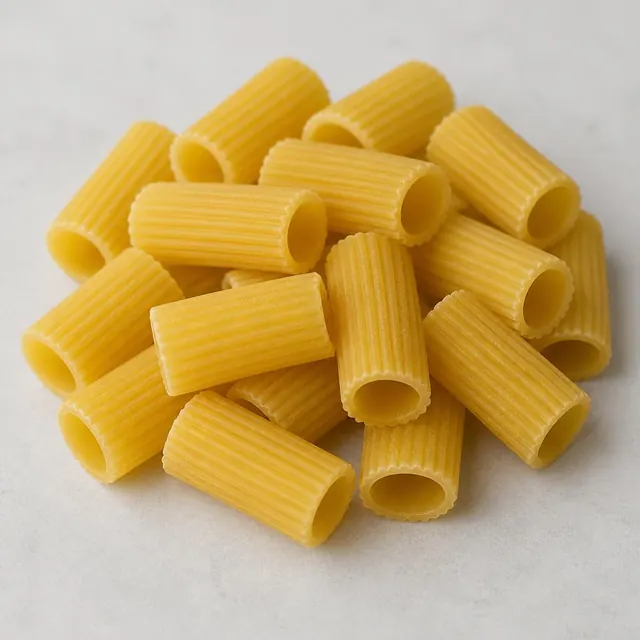
Rigatoni are ridged tubes about 45 mm long and 15 mm wide with walls of around 1 mm, so somewhat wider than penne. The name comes from rigare, to rule or furrow, after the grooves running along their length. Sources count them among the classic shapes of Roman cooking.
They are made industrially by extruding semolina and water through a die; depending on the extrusion they come out straight or slightly curved. Drying gives them their strength, which is why they are not made at home.
Ridges and a wide opening hold thick, meaty sauces: Roman gricia with guanciale and pecorino, arrabbiata, Neapolitan ragù and pajata – calf intestines, a Roman speciality.
Recipes
Menus
Techniques and tips
Related entries
Sources
- Caz Hildebrand, Jacob Kenedy: The Geometry of Pasta (2010), heslo Rigatoni
- Caz Hildebrand, Jacob Kenedy: The Geometry of Pasta (2010), recept Gricia (rigatoni)
- Caz Hildebrand, Jacob Kenedy: The Geometry of Pasta (2010), kapitola Semolina Pasta
- Divella: 17 Rigatoni, údaj doby vaření
- Granoro: Rigatoni Dedicato n. 183, údaj doby vaření