Pasta shapes · Italian cuisine
Paccheri
Large smooth tubes from Campania that open up on the plate – a pride of Neapolitan cooking.
At a glance
- Origin
- Campania, Naples.
- Dough
- Durum wheat semolina and water.
- Production
- Extruded through a wide die, then dried.
- Pairs with
- Neapolitan ragù, ricotta and tomato, beans, stuffed and baked.
- Cooking time
- Dried 11–12 min, depending on the maker; cooked for less time before baking.
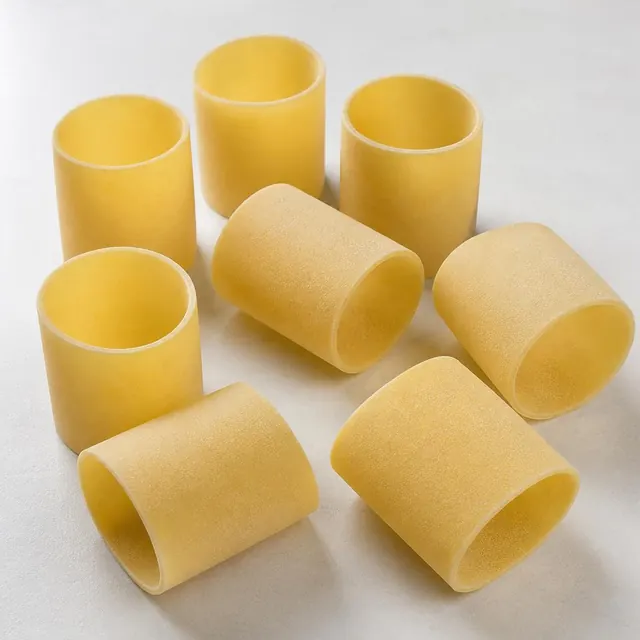
Paccheri are large, wide tubes, usually smooth and less often ridged. They come from Campania, and the name is most often traced to a Neapolitan word for a slap – after the sound they are said to make when eaten. On the fork they often split open into a flat sheet.
They are made of durum semolina as a dried pasta extruded through a die. They differ from rigatoni in their larger diameter and usually smooth surface.
In Naples they are stuffed, served with ragù, with beans or with ricotta and tomato; a festive version is paccheri “in piedi” – stood upright, filled with ricotta, baked and dressed with Neapolitan ragù.