Pasta shapes · Italian cuisine
Conchiglie
Semolina shells – from tiny ones for soup to large conchiglioni for stuffing.
At a glance
- Origin
- All of Italy; large shells mainly in Campania.
- Dough
- Durum wheat semolina and water.
- Production
- Industrially extruded and dried.
- Pairs with
- Thick, chunky sauces; small ones in soup, large ones stuffed.
- Cooking time
- Dried 10–12 min, large conchiglioni 12–15 min, depending on the maker.
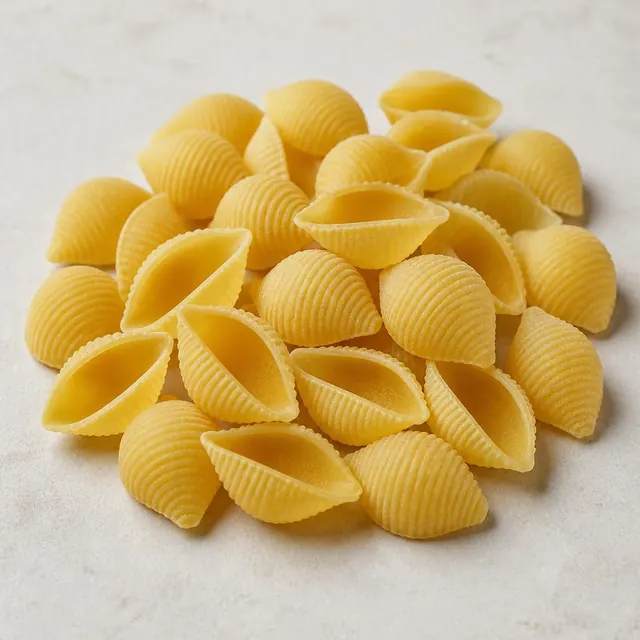
Conchiglie are shaped like seashells, with a smooth or ridged surface. They come in several sizes: the smallest, conchigliette, go into broths and soups, while the largest, conchiglioni, are served as pastasciutta, that is, with a sauce. They are known throughout Italy, and the large shells are most common in Campania.
This is a purely industrial shape of durum semolina and water, extruded and dried; there is no home-made tradition. They are boiled in plenty of salted water.
The hollow scoops up sauce, so they suit chunky and thick sauces; large conchiglioni are also stuffed and baked.
Techniques and tips
Related entries
Sources
- Oretta Zanini De Vita: Encyclopedia of Pasta (2009), heslo Conchiglie
- Alan Davidson: The Oxford Companion to Food, heslo Pasta shapes
- Pasta Garofalo: N° 84 Shells, údaj doby vaření
- Granoro: Conchiglie rigate n. 105 Cuore Mio Bio, údaj doby vaření
- Pasta Garofalo: Conchiglioni, údaj doby vaření
- Granoro: Conchiglioni Dedicato n. 102, údaj doby vaření
- Divella: 87b Conchiglioni, údaj doby vaření