Sauces · Italian cuisine
Carbonara
Rome’s sauce of guanciale, eggs, pecorino and pepper – creamy without any cream.
At a glance
- Origin
- Rome, Lazio; documented only after the Second World War, in print from 1950.
- Production
- Rendered guanciale, pasta, and off the heat eggs and cheese thickened by residual heat.
- Pairs with
- Spaghetti and other durum-wheat pasta such as rigatoni.
- Use
- Belongs to the Roman family with gricia, amatriciana and cacio e pepe.
Carbonara is a Roman sauce of guanciale, eggs with more yolks than whites, Pecorino Romano and freshly ground black pepper. Its creaminess comes not from cream, which the traditional version rules out entirely, but from eggs and cheese thickened only by the residual heat of the cooked pasta.
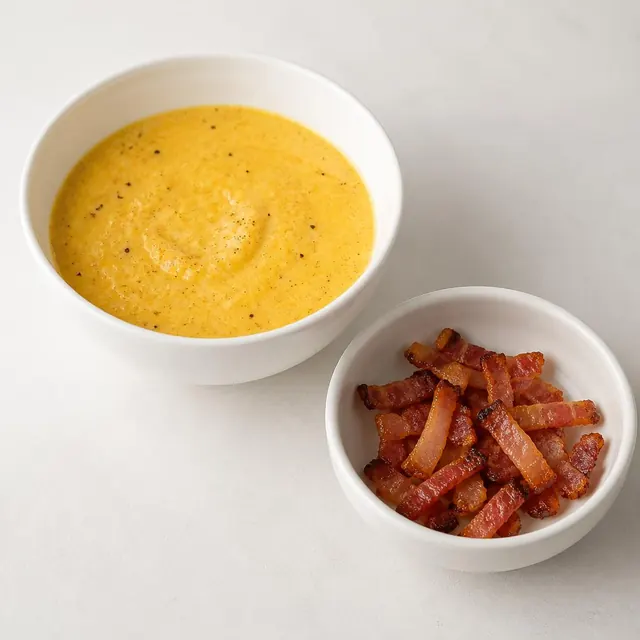
The guanciale is cut into strips and rendered slowly, the pasta goes in al dente, and off the heat it is tossed quickly with the eggs, cheese and pepper.
Its origin is uncertain: one theory traces it to the “cacio e ova” of Apennine charcoal burners, another to encounters with American soldiers in 1944. The name appears in print in 1950, a recipe in Chicago in 1952 and an Italian one in 1954 – still with pancetta and Gruyère. A 1960 cookbook gives it with guanciale.