Pasta shapes · Italian cuisine
Spaghetti
Long, round strands of durum semolina – the best-known dried pasta in the world.
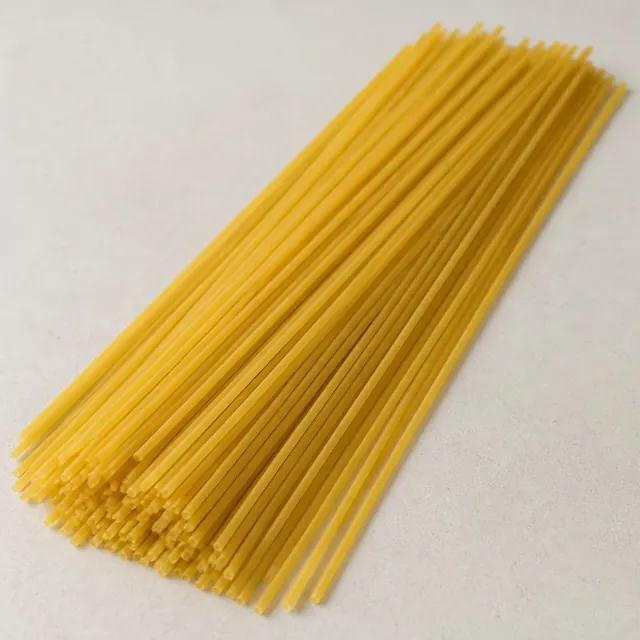
At a glance
- Origin
- Southern Italy, the dried-pasta tradition around the Bay of Naples.
- Dough
- Durum wheat semolina and water.
- Production
- Industrially extruded through a die, then dried.
- Pairs with
- Oil-based, tomato and smooth sauces, seafood.
- Cooking time
- Dried 7–10 min, depending on the maker and thickness.
Spaghetti are long, thin strands with a round cross-section. They belong to the family of dried durum-wheat pastas whose making moved in Italy from the home kitchen into mills and workshops; by the early sixteenth century the hills around the Bay of Naples were dotted with small mills. A thinner version is called spaghettini, thinner still are vermicelli and capellini.
The dough is durum semolina and water. It is extruded through a die and then dried – drying is what gives such thin extruded shapes their strength, which is why even expert cooks buy them rather than make them. Spaghetti differ from spaghetti alla chitarra in their round section: chitarra is cut from a sheet with wires and comes out square.
They suit sauces that coat a thin strand evenly – olive oil and garlic, tomato or seafood.
Recipes
Menus
Techniques and tips
Related entries
Sources
- Oretta Zanini De Vita: Encyclopedia of Pasta (2009), kapitola From Homemade Pasta to the Maccheronaio
- Caz Hildebrand, Jacob Kenedy: The Geometry of Pasta (2010), kapitola Semolina Pasta
- Alan Davidson: The Oxford Companion to Food, heslo Pasta shapes
- Caz Hildebrand, Jacob Kenedy: The Geometry of Pasta (2010), heslo Linguine, Bavette and Trenette
- Divella: 8 Spaghetti Ristorante, údaj doby vaření
- Pasta Garofalo: N° 9 Spaghetti, údaj doby vaření