Pasta shapes · Italian cuisine
Tonnarelli
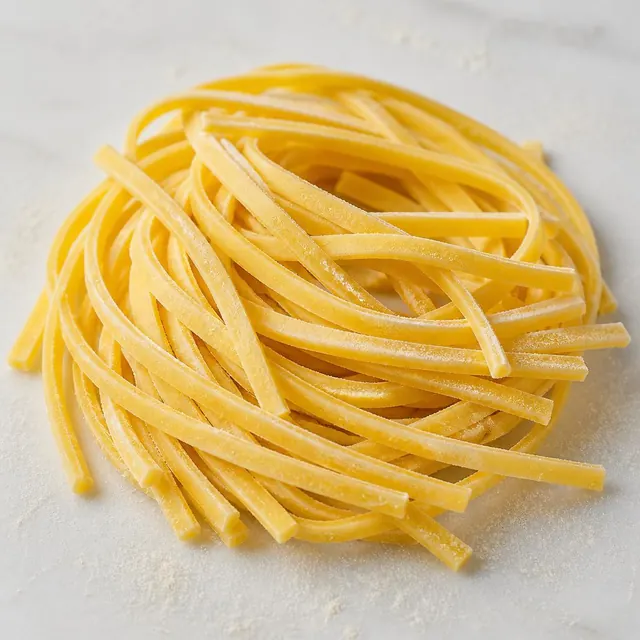
Roman egg pasta with a square cross-section, close kin of Abruzzo’s spaghetti alla chitarra.
At a glance
- Origin
- Lazio (Rome); counterpart of Abruzzo’s maccheroni alla chitarra.
- Dough
- Durum semolina and eggs, sometimes a little water.
- Production
- A thick sheet is pressed through the wires of a chitarra.
- Pairs with
- Cacio e pepe and other Roman cheese-based sauces.
- Cooking time
- Fresh: briefly, depending on thickness; dried: per packet.
Tonnarelli are long strands with a square section roughly 2–3 mm on each side. It is the Lazio name for the pasta that Abruzzo calls spaghetti or maccheroni alla chitarra; sources describe them as essentially the same shape under two regional names.
The dough is durum semolina and eggs, sometimes with a little water. After resting it is rolled into a sheet thicker than for ordinary noodles, laid on a chitarra – a frame strung with taut metal wires – and pressed through with a rolling pin. The wires cut the sheet into square strands with a slightly rough surface that holds sauce well. Unlike spaghetti they are cut rather than extruded, which is why they are not round.
In Rome they are the classic base for cacio e pepe.