Pasta shapes · Italian cuisine
Linguine
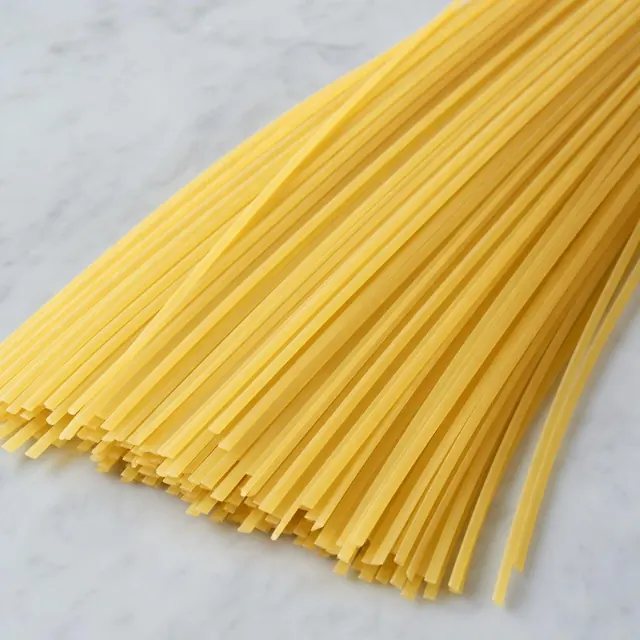
Flattened “little tongues” – long strands between spaghetti and ribbons, great with pesto and seafood.
At a glance
- Origin
- Italy, a shape of the bavette and trenette family.
- Dough
- Durum wheat semolina and water.
- Production
- Extruded through a flattened die opening, then dried.
- Pairs with
- Pesto genovese, tomato sauces, fish and seafood.
- Cooking time
- Dried 8–12 min, depending on the maker.
Linguine are long strands with a flattened section, about 26 cm long, 3 mm wide and 2 mm thick. The name means “little tongues”; they are also called lingue di passero, sparrow’s tongues. They belong to the bavette family, and trenette are a slightly larger form.
Like other dried long shapes they are made from durum semolina and water, extruded through a die and dried. They differ from spaghetti in their flattened section and from egg tagliatelle in being extruded rather than cut from a sheet, as well as narrower and thicker.
The flat shape carries loose and oil-based sauces well: pesto genovese, tomato, puttanesca, tuna or seafood.