Flours and grains · Italian cuisine
Cornmeal for polenta
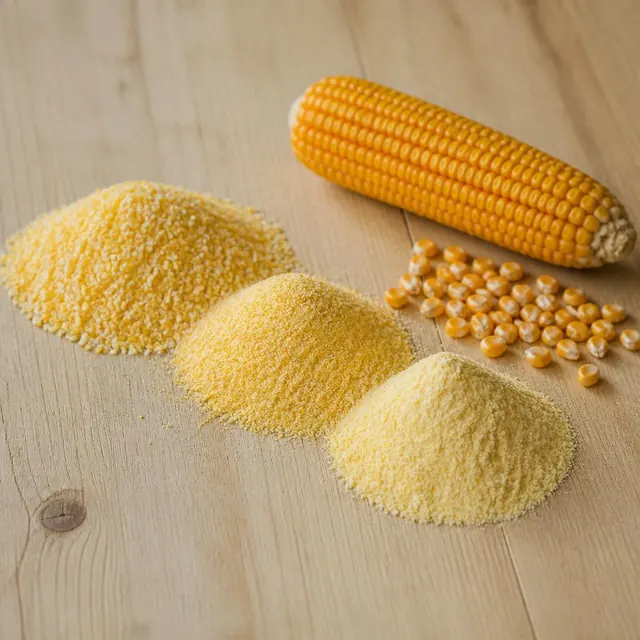
Ground maize in several grinds – from coarse bramata for classic polenta to very fine fumetto for baking and coating.
At a glance
- Origin
- Northern and parts of central Italy; in Austria maize grits are also sold under the name Polenta.
- Production
- Maize is ground into fragments of the endosperm with little bran and graded by coarseness.
- Ratio
- Firm polenta 3 l water per 1 kg, soft at least 4 l per 1 kg; instant about 3 l per 500 g. Fat ≤ 3.0 % in dry matter (CZ).
- Use
- Polenta, crisp coatings; fioretto and fumetto in biscuits and baking, often mixed with wheat flour.
- Cooking time
- Bramata at least 45–50 min, fioretto about 15 min, instant only a few minutes.
In Italy maize is eaten mainly as polenta, a traditional dish of the north and parts of the centre. Polenta meal consists of fragments of the starchy endosperm with little bran; its colour depends on the grain and the grind varies from region to region. Italian shops distinguish bramata (medium to coarse, the classic for polenta), fioretto (medium), a fine meal for creamier polenta and very fine fumetto for sweets, baking and breading.
The grind determines cooking time: polenta from fioretto can be ready in 15 minutes, while bramata needs at least 45–50 minutes. For a firm polenta allow 3 l of water per 1 kg of meal, for a soft one at least 4 l. Instant polenta is steam-precooked and dried; for a soft result about 3 l of boiling water per 500 g is recommended.
Czech rules limit fat in maize flours and grits to 3.0 % of dry matter and the ash of maize grits to 0.90 %.