Bread · Czech cuisine
Vánočka
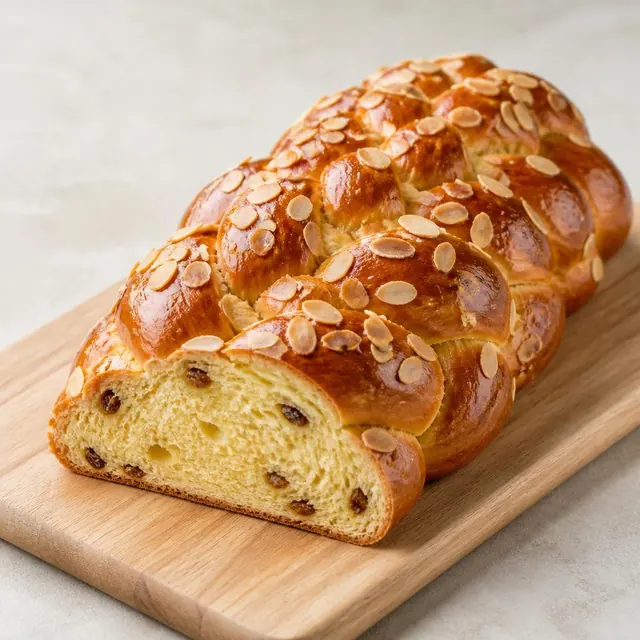
Vánočka – the Czech sweet Christmas bread plaited from strands of yeast dough, with raisins and almonds.
At a glance
- Origin
- Czech lands; first mentioned in the 15th century (Jan of Holešov).
- Dough
- Sweet yeast-raised wheat dough with fat, often butter, raisins, almonds, lemon zest and rum.
- Production
- Plaited from strands, traditionally nine in layers of 4–3–2; egg-and-butter glaze, icing sugar.
- Ratio
- Fine bakery ware: at least 8% fat or 5% sugar on flour; luxury version 20–22% fat.
Vánočka is a sweet bread plaited from strands of yeast dough and an essential part of a Czech Christmas. Raisins, slivered almonds, lemon zest and rum usually go into the dough; the top is glazed with egg and butter and dusted with icing sugar. The traditional plait has nine strands in three layers – four at the bottom, three in the middle and two on top.
Vánočka counts as fine bakery ware (jemné pečivo), with at least 8% anhydrous fat or 5% sugar on flour weight. The most common types are only slightly above that threshold. Their crumb holds about 9% anhydrous fat. A luxury vánočka dough contains 20–22% fat, most often butter, calculated on flour. Once seasonal, it is now sold all year round.
The first written mention of a special Christmas bread in the Czech lands comes from the fifteenth-century Benedictine Jan of Holešov, who read the plaits as the swaddled Christ Child. Besides the almost universal name vánočka, regional names were used: houska in Bohemia, calta in the south, especially around Domažlice, štědrovnice in the north, and štrucle, pletenka or pletenice in Moravia and Silesia.
Techniques and tips
Related entries
Sources
- Český rozhlas, Radio Prague International: Vánočka – a Christmas Eve sweetbread steeped in symbolism
- Živa (Akademie věd ČR), A. Černá: Voňavý jazykový koutek – o perníku, koření, vánočkách a rozinkách
- Ministerstvo zemědělství ČR, J. Příhoda, M. Sluková, J. Dřízal (VŠCHT Praha): Jak poznáme kvalitu? Chléb a pečivo
- Sbírka zákonů ČR: Vyhláška č. 18/2020 Sb., o požadavcích na mlýnské obilné výrobky, těstoviny, pekařské výrobky a cukrářské výrobky a těsta (2020)