Bread · French cuisine
Brioche
A French yeast dough enriched with butter, eggs and sugar, with a fine, fluffy crumb.
At a glance
- Origin
- France; a traditional viennoiserie, pâte à brioche is part of French bakery training.
- Dough
- Wheat flour, butter, eggs, sugar, yeast, salt, in some formulas also a pre-ferment and rum.
- Production
- Butter added at the end of kneading; Nanterre made of balls of about 50 g in a long tin, egg-washed.
- Ratio
- Example: 500 g flour, 300 g eggs, 250 g butter, 60 g sugar, 10 g salt and 20 g yeast.
Brioche is a French yeast-raised pastry (pâte levée) set apart from bread by its rich enrichment with butter, eggs and sugar. Pâte à brioche is one of the basic yeast doughs that French vocational training for bakers and pastry cooks lists explicitly, alongside laminated yeast dough and the bread doughs.
Proportions vary with the formula. One French lycée specification gives, as a share of the total dough weight, 36% T55 flour, 20% butter, 18% eggs, 15% pre-ferment, 6.5% sugar, 2.5% yeast and 1% each of rum and salt. A professional recipe for brioche Nanterre uses 300 g of eggs and 250 g of butter for 500 g of flour. The butter goes in only after the other ingredients, towards the end of kneading.
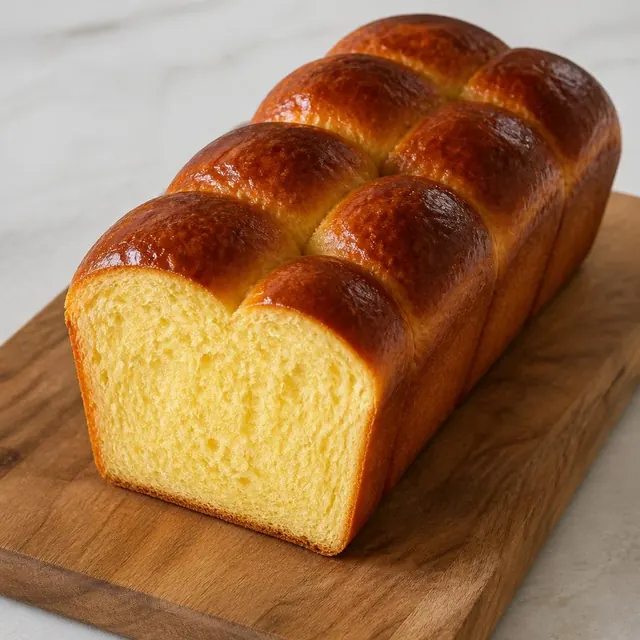
Brioche Nanterre is shaped from small balls of dough of about 50 g, set side by side in a long tin and brushed with egg before baking.
Techniques and tips
Related entries
Sources
- Lycée Paul Vergès (Académie de La Réunion): Brioche – cahier des charges, AQPrFa 40 (2025)
- Meilleur du Chef: Brioche Nanterre, fiche recette illustrée
- Grands Moulins de Paris: Brioche Délice Beurre, fiche technique réf. 10246
- Ministère de l’Éducation nationale (Eduscol): Référentiel Mention complémentaire pâtisserie boulangère