Menu · 2 components
Pasta with Genoese pesto
One serving of pasta with Genoese pesto of basil, pine nuts, Parmesan and pecorino; potato gnocchi are the alternative.
Menu portion35 min474.7 kcal per menu portion
- Good for lunch
- Good for dinner
1Main course
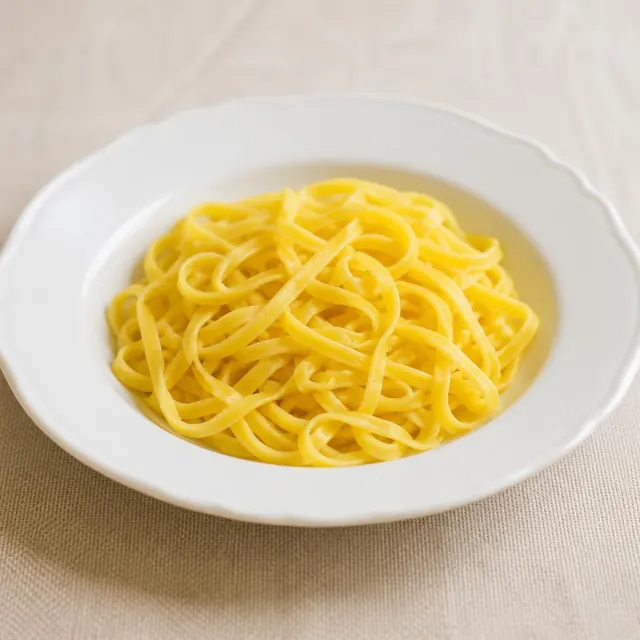
Cooked pasta (shop-bought) traditional
278 kcal per menu portion · 1 × recipe portion per menu portion
- Vegan
- Lactose free
Contains: Gluten · May contain: Egg
Quantities for the whole recipe (4 servings).
Shown: ready-made product Cooked pasta (shop-bought).
or:
- Potato gnocchi (gnocchi di patate) · 516 kcal per menu portion
Ingredients
- 300 gPasta, dry, enriched
- 2 gSalt, table editorial addition
Method
- Bring a large pot of water to a boil and add 20 g salt.
- Add pasta and cook according to the packet until al dente.
TipCooking pastaPasta water isn't waste, it's liquid glue that talks the sauce into clinging to the pasta.Why and howShow less
Why
In the first minutes of boiling, starch is released from the surface of the pasta and it turns sticky; plenty of rapidly boiling water and a stir at that point stop it clumping, and the water doesn't cool down as much when the pasta goes in. Salt only gets into pasta while it cooks, which is why the water is salted generously, roughly 10 g per litre; that amount has a negligible effect on the boiling point, and oil in the water is pointless because it floats on top and doesn't prevent sticking. The cooking water is full of dissolved starch that thickens the sauce and helps its fat combine with water into a smooth emulsion that clings to the pasta. That is why pasta isn't rinsed after draining – you would wash off the starch the sauce holds on to and cool the pasta down; the only exception is pasta for a cold salad.
How to do it
- Allow roughly a litre of water per 100 g of pasta and add about 10 g of salt per litre once it boils.
- Drop the pasta into rapidly boiling water and stir now and then for the first two minutes.
- Don't add oil to the water; it won't stop sticking.
- Cook a minute or two less than the packet says and keep tasting.
- Before draining, scoop out a mugful of the cooking water.
- Don't rinse the pasta; transfer it straight into the sauce and finish cooking it there with a little of the cooking water.
If it goes wrong
Loosen pasta that has stuck together in the sauce with a little hot cooking water, or dip it briefly in boiling water and stir. Overcooked pasta won't firm up again – bake it or add it to a soup, and next time start tasting earlier. Under-salted pasta can only be rescued by a well-seasoned sauce.
- Drain pasta; do not use the drained water as sauce.
Alternative: Potato gnocchi (gnocchi di patate)
Ingredients
- 1,000 gPotatoes, russet, flesh and skin, raw (Includes foods for USDA's Food Distribution Program)
- 350 gWheat flour, white, all-purpose, unenriched
- 50 mlBeverages, water, tap, drinking
- 4 lBeverages, water, tap, drinking not counted – removed
- 4 gSalt, table editorial addition
Method
- Boil the potatoes in their skins in unsalted water (or steam them) for 30–40 minutes until a knife slides in without resistance. Drain and let them steam dry for a minute.
- Peel the potatoes while still hot (hold them with a fork or cloth) and press them through a ricer onto a floured board. Spread them out and let the steam escape for 2–3 minutes.
- Sprinkle most of the flour over the potatoes and work it in briefly by hand just until you have a smooth, soft, slightly sticky dough; do not knead for long, or the dough will toughen and the gnocchi turn hard. Keep the rest of the flour for dusting.
TipPotato dough: dumplings, noky, gnocchiPotato dough wants dry, cooled potatoes, just enough flour to hold, and quick hands: kneading and standing make it slack and sticky.Why and howShow less
Why
A cooked potato is a cluster of cells full of swollen starch (see the Mashed potatoes card); when long kneading or blending ruptures the cells, the released starch forms a sticky mass with the water from the potatoes, more flour then gets added, and the dumpling turns out tough and gummy. Floury potatoes of cooking type C, or B, have more starch and less water and give a supple dough with less flour, whereas watery waxy potatoes of type A thin the dough; that is why the potatoes are boiled in their skins or baked and left to steam off and cool before use. Finished dough softens and gets sticky as it stands, and the more flour then goes in, the tougher the dumpling, so it is worked quickly and cooked at once. In the water it keeps its shape when the water only simmers and the surface sets quickly, whereas a hard boil and long cooking wear the surface away and the dumpling or gnocchi falls apart. Green patches, eyes and sprouts of potatoes contain bitter, toxic glycoalkaloids (solanine), so the German BfR advises removing them generously.
How to do it
- Choose floury potatoes of type C, or B; boil them in their skins or bake them, peel and let them steam off and cool, even a day ahead in the fridge.
- Cut out green patches and eyes generously; do not use green, shrivelled or heavily sprouted potatoes, or potatoes that taste bitter.
- Grate the potatoes finely or put them through a ricer, do not blend them; add egg, salt and flour and bring the dough together quickly, just until smooth and holding its shape.
- Add the flour gradually: first cook one small test dumpling or gnocchi and add more flour only if it falls apart.
- Cook shaped dumplings and gnocchi at once, in small batches, in salted, gently simmering water; lift gnocchi out shortly after they float.
- Take a cooked dumpling out at once, pierce it and slice it with thread or a sharp knife; move gnocchi straight into the sauce or melted butter so they do not stick together.
If it goes wrong
Firm up sticky dough with only a small amount of flour or semolina and shape it at once, as more kneading makes it worse. If the test dumpling falls apart, add a little flour or egg; if a whole dumpling falls apart in the water, cook the rest of the dough as small gnocchi or fry it as pancakes. Tough, gummy dumplings will not soften again: slice and fry them in butter, perhaps with eggs or cabbage, and next time use less flour and knead less.
- Divide the dough, roll each piece into a rope about 2 cm thick and cut it into 2–3 cm pieces. Roll each piece with your thumb over the back of a fork or the coarse side of a grater so it gets ridges and a dimple.
- Bring 4 litres of water with 40 g of salt to the boil and cook the gnocchi in batches. As soon as they rise to the surface (after about 1–2 minutes), lift them out with a slotted spoon and toss them with the sauce at once.
2Sauce
Genoese pesto (pesto alla genovese)
196 kcal per menu portion · 1 × recipe portion per menu portion
- Low in lactose
- Gluten free
Contains: Milk
Quantities for the whole recipe (6 servings).
Ingredients
- 50 gBasil, fresh
- 100 mlOil, olive, salad or cooking
- 45 gCheese, parmesan, grated
- 15 gCheese, romano
- 8 gGarlic, raw
- 15 gNuts, pine nuts, dried
- 2 gSalt, table
Method
- Rinse the basil leaves quickly in cold water and dry them thoroughly on a cloth without crushing them. Grate the cheeses.
- In a marble mortar, crush the garlic with a few grains of coarse salt to a paste with a wooden pestle, then add the pine nuts and crush them too.
- Add the basil a handful at a time with the remaining grains of salt and grind it with a circular motion of the pestle against the sides of the mortar, rather than pounding, until bright green liquid runs from the leaves. Work quickly and at room temperature so the basil does not oxidise.
- Work in the Parmigiano and pecorino and finally beat in the oil drop by drop with the pestle until a smooth sauce forms. Without a mortar, you can make pesto in a blender with a chilled jar, using short pulses at low speed so it does not warm up.
- Do not heat the pesto; to serve, loosen it only with 1–2 tablespoons of pasta cooking water and toss it with the pasta off the heat. Traditionally trofie or trenette are cooked together with diced potatoes and green beans in the same water. One serving of pesto goes with one serving of pasta (about 80–100 g dried).
Allergens
Contains: Gluten, Milk
May contain: Egg
Derived from ingredients – check the package label.
Nutrition, allergens and calories are for the default choice – the first alternative of every slot.
Nutrition per menu portion
Per serving
- Protein13.4 g11%
- Fat20.9 g40%
- Total carbohydrate (by difference)58.1 g49%
Share of energy from protein, fat and carbohydrate (4 / 9 / 4 kcal per g), not share by weight.
- Energy
- 474.7 kcal
- Protein
- 13.4 g
- Fat
- 20.9 g
- Total carbohydrate (by difference)
- 58.1 g
- Total dietary fibre (USDA)
- 2.7 g
- Saturated fatty acids
- 4 g
- Sodium
- 499.5 mg
- Salt (sodium × 2.5)
- 1.2 g
Per 100 g
- Energy
- 219.1 kcal
- Protein
- 6.2 g
- Fat
- 9.6 g
- Total carbohydrate (by difference)
- 26.8 g
- Total dietary fibre (USDA)
- 1.2 g
- Saturated fatty acids
- 1.9 g
- Sodium
- 230.5 mg
- Salt (sodium × 2.5)
- 0.58 g
A dash means the value is unknown, not zero. Salt is calculated from sodium (g salt = mg sodium × 2.5 / 1000) and includes sodium from all ingredients.
Calculation limitations
- Nutrition is a calculated estimate, not a laboratory measurement.
- Some ingredient quantities use documented estimates or household-measure assumptions.
- The number of servings is an editorial estimate (midpoint of the source range or based on the dish type and energy).
- Some specific ingredients are represented by the closest generic food with the same culinary function.
- Fibre, saturated fat and sodium of cooked ingredients are estimated from the consumed ingredient amounts; for drained ingredients, sodium is included only where the retained amount is an explicit editorial estimate.
- Some process effects could not be resolved in this calculation.
- Menu nutrition is the sum of its component recipes, each scaled to one menu portion.