Pasta shapes · Italian cuisine
Cannelloni
Sheets of fresh pasta rolled around a filling and baked – the “big reeds” of Italian cooking.
At a glance
- Origin
- Italy; documented in print from the early 20th century.
- Dough
- At home flour, eggs and oil; industrially semolina and water.
- Production
- Blanched squares rolled around a filling and baked.
- Pairs with
- Meat, fish or cheese fillings, baked.
- Cooking time
- Sheets are blanched briefly, then baked; dried tubes per packet.
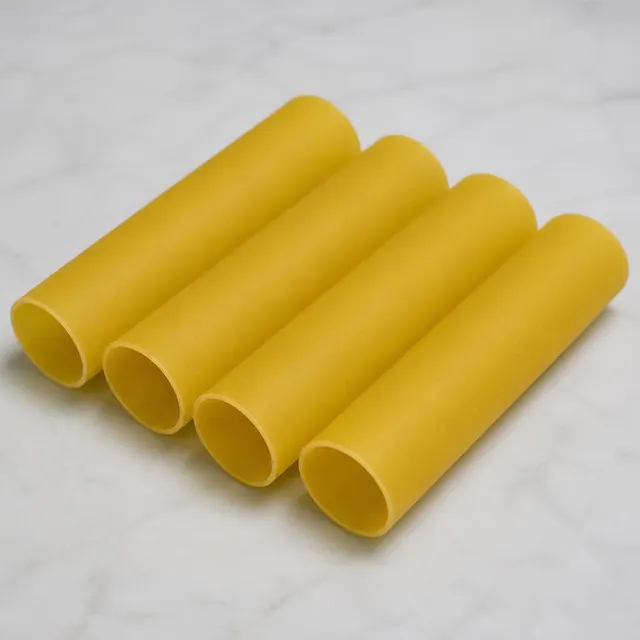
Cannelloni are tubes about 10 cm long and 3 cm wide, made by rolling a sheet of pasta around a filling. The name comes from canna, a reed. As a dish they first appear in print in the early twentieth century and spread worldwide after the Second World War.
At home a dough of flour, eggs and often a spoonful of olive oil is rolled into a thin sheet, cut into squares of about 13 cm, briefly boiled and dried. Each receives a filling – meat, fish or cheese according to local custom – and is rolled up. The rolls are then baked, and can be assembled a day ahead. Factories make ready dried tubes of semolina and water, smooth or ridged.
They differ from lasagne in that the pasta wraps the filling rather than layering it.