Cheese and charcuterie · Italian cuisine
Ricotta
Delicate dairy product made from whey, not strictly a cheese – cannoli filling and zeppole batter.
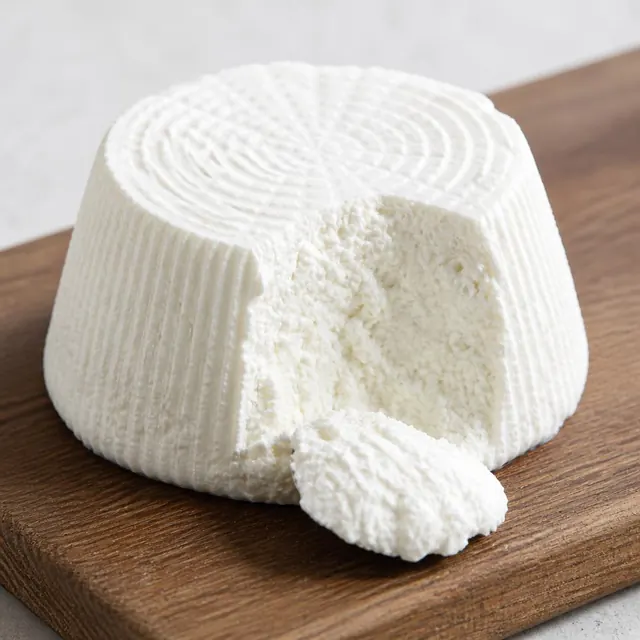
At a glance
- Origin
- All of Italy; Ricotta Romana PDO from Lazio.
- Milk
- Whey from sheep’s or cow’s milk; for Ricotta Romana PDO sheep’s whey, with sheep’s milk optionally added.
- Ageing
- Not aged; eaten fresh.
- Use
- Cannoli filling, zeppole batter, creamy sauces.
- Substitutes
- At a pinch fine quark, which is tangier and denser; in cannoli and other classics the swap changes the dish.
Ricotta is not a cheese in the strict sense: it is not made by curdling milk with rennet but from the whey left over from cheesemaking. The whey is lightly acidified and heated to about 80 °C until the whey proteins coagulate into fine flakes, which are lifted out and drained.
It is usually made from sheep’s or cow’s whey. Ricotta Romana PDO from Lazio comes from the whey of whole sheep’s milk left over from making pecorino; up to 15% whole sheep’s milk may be added during heating. It has a very fine texture, a deeper colour than cow’s-milk ricotta and a delicate, sweetish taste of fresh milk. It is not aged and is made mainly from November to June.
In the kitchen it fills cannoli, goes into zeppole batter and softens sauces such as spinach sauce.