Cheese and charcuterie · Italian cuisine
Mozzarella
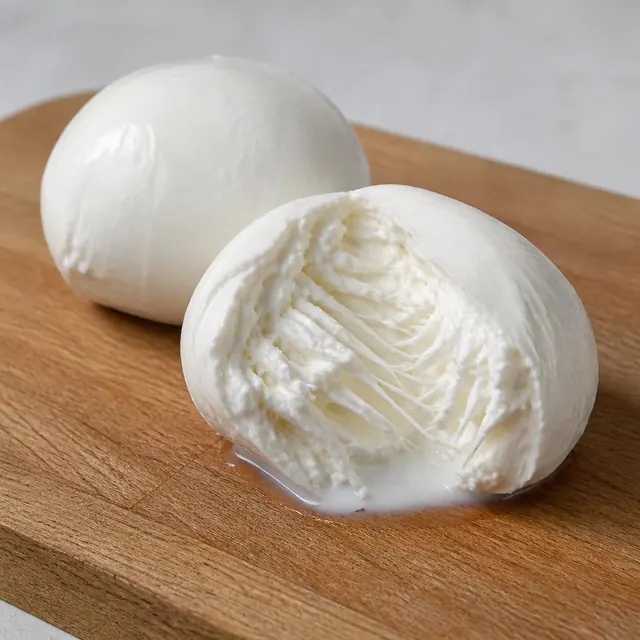
Fresh stretched-curd cheese – buffalo PDO from Campania, or cow’s-milk fior di latte.
At a glance
- Origin
- Buffalo PDO: Campania and parts of Lazio, Apulia and Molise; “Mozzarella” TSG not tied to an area.
- Milk
- Whole buffalo milk (PDO) or cow’s milk (fior di latte).
- Ageing
- Not aged; eaten fresh.
- Use
- Caprese, pizza margherita, melanzane alla parmigiana, arancini.
- Substitutes
- Buffalo and cow’s-milk versions can stand in for each other; cow’s milk is leaner, so flavour and juiciness change.
Mozzarella is a fresh pasta filata cheese. The acidified curd is covered with water at about 90 °C, kneaded and stretched into an elastic rope from which individual pieces are torn off (mozzare); they firm up in cold water and are salted in brine.
Mozzarella di Bufala Campana PDO is made from whole buffalo milk from a defined area: the whole provinces of Caserta and Salerno, parts of Naples, Benevento, Latina, Frosinone, Rome and Foggia, and the municipality of Venafro. The milk is curdled with a natural whey starter and calf rennet. Mozzarella made from cow’s milk is leaner; in Italy this whole-cow’s-milk cheese is called fior di latte.
In 1998 “Mozzarella” was registered in the EU as a Traditional Speciality Guaranteed (TSG); the specification covers the traditional method with a natural starter, not the origin. Mozzarella is eaten fresh, for example in insalata caprese, and goes onto pizza margherita well drained.
Recipes
Menus
Related entries
Sources
- Consorzio di tutela Mozzarella di Bufala Campana DOP: Territory
- Consorzio di tutela Mozzarella di Bufala Campana DOP: Bufala Campana – produzione
- Treccani: Vocabolario, heslo mozzarella
- Treccani: Vocabolario, heslo fiordilatte
- Regolamento (CE) n. 2527/98 della Commissione del 25 novembre 1998 (Mozzarella STG), kopie Regione Marche