Kitchen terms · International
Water bath (bain-marie)
Heating or cooking food in a vessel set in hot water, which shields it from direct heat.
At a glance
- Origin
- French bain-marie, recorded 1516; by tradition named after the alchemist Maria the Jewess.
- Production
- The vessel with the food stands in or over hot water, not directly on the heat.
- Use
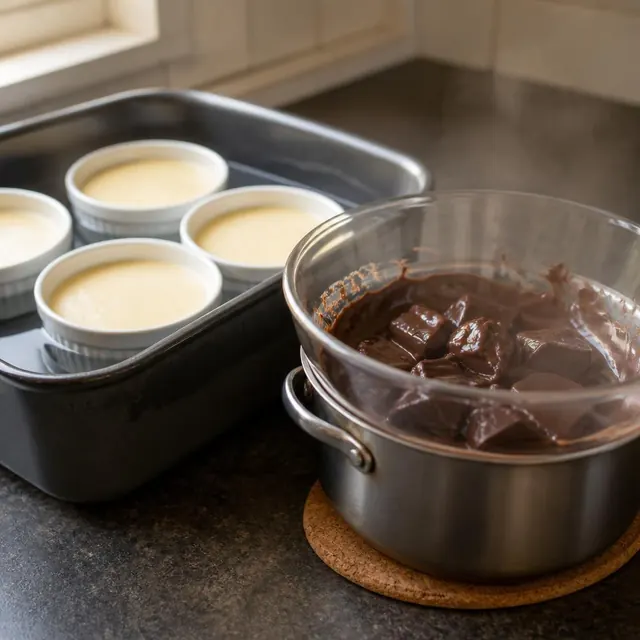
- Cooking and baking eggs, custards and soufflés; keeping sauces warm; gently melting chocolate.
- Substitutes
- Cooking in the bath finishes the food; holding in the bath only keeps a finished dish warm.
According to the Trésor de la langue française, a bain-marie is boiling water that heats substances in an immersed vessel gently and evenly; in the kitchen the name also covers a double vessel and the hot-water tank of a kitchen range. The German DWDS describes a pot of boiling water holding a smaller pot, so that food does not catch. Treccani instead gives water usually below boiling point; the sources differ here. The glossary of the 1907 English edition of Escoffier’s guide distinguishes two uses: keeping food in its containers warm, or poaching and cooking it in the bath.
Cooking in a water bath means the food actually sets or bakes there, as with eggs, custards or soufflés in a dish placed in an oven tin of hot water. Holding is for sauces and finished dishes that must neither catch nor cool. The name is recorded from 1516, and medieval Latin knew balneum Mariae. Tradition links it to the alchemist Maria the Jewess; both Treccani and the TLFi mention the legend that she was the sister of Moses.
Techniques and tips
Related entries
Sources
- CNRTL: Trésor de la langue française informatisé – bain-marie
- Treccani: Vocabolario on line – bagnomaria
- A. Escoffier: A Guide to Modern Cookery (London 1907), Glossary – Bain-Marie; Project Gutenberg eBook #71395
- DWDS – Digitales Wörterbuch der deutschen Sprache: Wasserbad
- Cambridge Dictionary: bain-marie