Kitchen terms · French cuisine
Poaching
Gentle cooking in liquid kept just below boiling point, which must not boil hard.
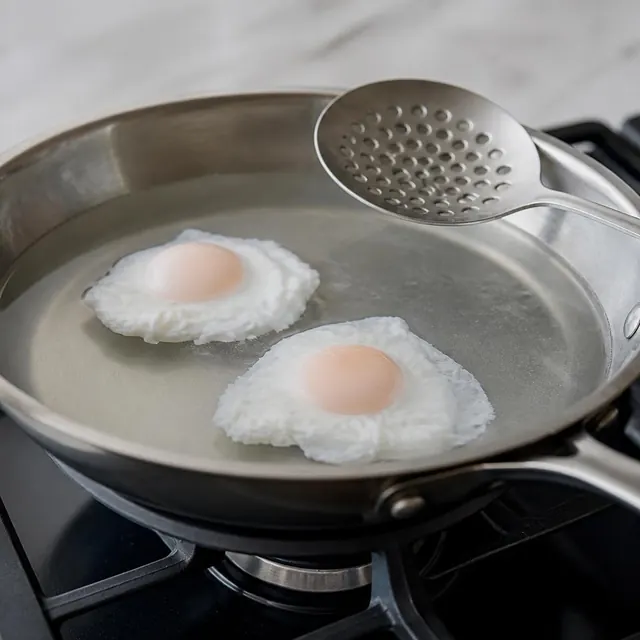
At a glance
- Origin
- French pocher from poche, pocket; poached egg recorded around 1223.
- Production
- Cooking in liquid just below boiling point, without a rolling boil.
- Use
- Eggs, fish, poultry, quenelles, mousses, creams and fruit in wine or syrup.
- Substitutes
- In boiling the liquid bubbles; blanching is only a brief scald.
Poaching comes from French pocher, derived from poche, pocket. The Trésor de la langue française explains the original culinary sense with eggs: an egg without its shell is plunged into liquid close to boiling, so that the white sets and forms a “pocket” round the soft yolk. The poached egg, oef pochié, is recorded as early as about 1223. In a wider sense dumplings, fish or pears in red wine are cooked the same way.
Escoffier wrote in his 1907 guide that the best definition of a poaching is “a boiling that does not boil”: the liquid should come as close as possible to boiling point without boiling. The term covers large fish in court-bouillon, fillets in a little fish fumet, mousses in moulds, quenelles, eggs and creams. Large pieces of fish and poultry, he says, start in cold liquid, while most other items go into liquid already heated.