Kitchen terms · French cuisine
Sous vide
Cooking food in a vacuum-sealed bag in a water bath or steam at a precisely controlled temperature.
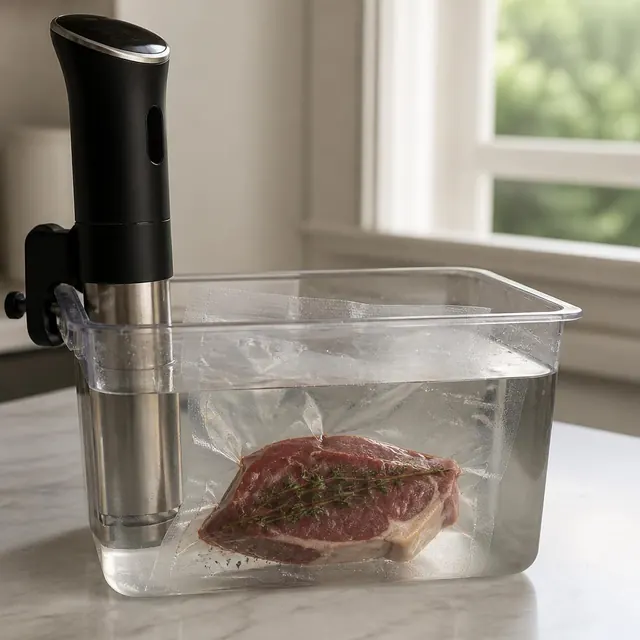
At a glance
- Origin
- Fr. sous vide – under vacuum; the method spread from the 1970s.
- Production
- Food is vacuum-packed and cooked in a water bath or steam at a controlled temperature.
- Ratio
- FSA (cooking in general): centre of the food at 70 °C for 2 min, 65 °C for 10 min or 60 °C for 45 min.
- Use
- Meat, poultry and fish.
- Substitutes
- Bain-marie cooking and poaching take place without vacuum packaging.
Sous vide is French for “under vacuum”. Food is vacuum-sealed in a bag and cooked in a water bath or steam at a precisely controlled temperature; the method came into use in the 1970s. A 2024 review credits it with even heat distribution and smaller flavour losses.
At low temperatures safety depends on how long the centre of the food holds the temperature. For cooking in general (not specifically sous vide), the UK Food Standards Agency treats as equivalent, measured in the centre of the food: 70 °C for 2 minutes, 65 °C for 10 minutes, 60 °C for 45 minutes. Bacterial spores are heat-resistant, and according to a 2022 review sous vide alone does not reliably inactivate them.