Kitchen terms · French cuisine
Glazing (glacer)
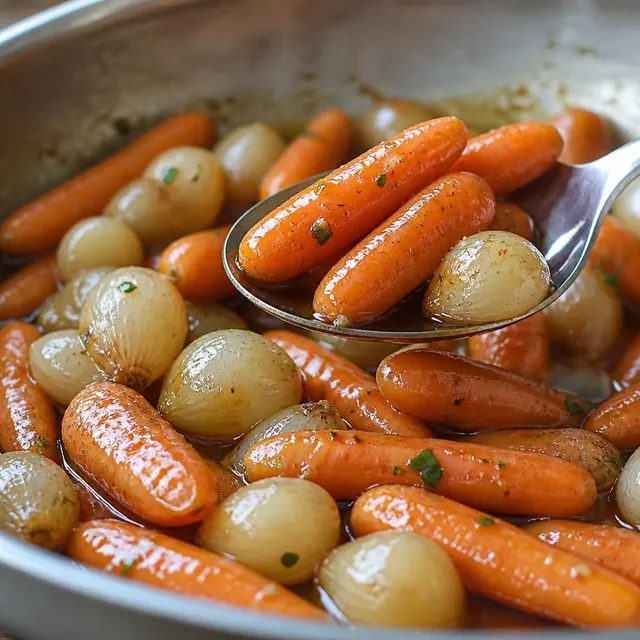
Coating food with a glossy layer – vegetables with a reduced butter-and-sugar liquid, meat with reduced stock or aspic, pastry with icing.
At a glance
- Origin
- Fr. glacer from Lat. glaciare; in pastry from 1680 (TLFi), borrowed into Czech as glazovat.
- Production
- Food is coated with a glossy layer of reduced butter-and-sugar liquid, reduced stock, aspic or icing.
- Ratio
- Escoffier, glazed carrots: per pint (≈ 570 ml) of water ½ oz (≈ 14 g) salt, 1 oz (≈ 28 g) sugar and 2 oz (≈ 57 g) butter.
- Use
- Carrots and small onions as garnish, meats, cakes, pastry and confectionery.
- Substitutes
- Gratinating: a golden crust of cheese and sauce, close to Escoffier’s glazing with Mornay sauce.
Czech glazovat, borrowed from French, means according to the SSJČ to give something a glaze for protection or shine, in the food trade for example confectionery. French glacer, besides meaning to freeze, also means to cover with a glossy layer; in pastry it is recorded from 1680, and the Trésor de la langue française lists coating meat with aspic and cakes with sugar among its culinary uses.
Escoffier uses the word for several operations. Glazed carrots are cooked in water with butter, salt and sugar until the liquid has almost evaporated to a syrup, in which the carrots are tossed to acquire a brilliant coat. Glace de viande is brown stock reduced until it coats a spoon, lending dishes flavour and body. Escoffier's chapter on glazings describes something else again: a dish coated with buttered sauce, or with Mornay sauce and cheese, is put under fierce heat until a golden film forms.
Recipes
Techniques and tips
Related entries
Sources
- Ústav pro jazyk český AV ČR: Slovník spisovného jazyka českého, heslo „glazovati“
- CNRTL / ATILF: Trésor de la langue française informatisé, heslo „glacer“
- DWDS – Digitales Wörterbuch der deutschen Sprache: glasieren
- Auguste Escoffier: A Guide to Modern Cookery (London 1907), č. 15 Meat glaze, č. 272 Glazings a č. 2059 Carottes glacées