Kitchen terms · Czech cuisine
Roux
Flour cooked in fat and used to thicken soups and sauces; jíška in Czech, Mehlschwitze in German.
At a glance
- Origin
- Fr. roux from Lat. russus – russet, culinary since 1762 (TLFi); Czech synonyms zápražka, zásmažka (SSJČ).
- Production
- Flour is cooked in fat to a white, pale or brown colour.
- Ratio
- Escoffier: 8 oz (≈ 227 g) clarified butter to 9 oz (≈ 255 g) flour (roughly 1 : 1) for all three grades.
- Use
- Béchamel, velouté, espagnole and Czech soups and sauces.
- Substitutes
- Dusting with flour: flour goes straight into the dish without being cooked first.
The standard dictionary of literary Czech defines jíška as flour browned in fat and zápražka as flour cooked with fat for thickening soups and sauces. It lists jíška, zápražka and zásmažka as synonyms and draws no distinction in meaning between them.
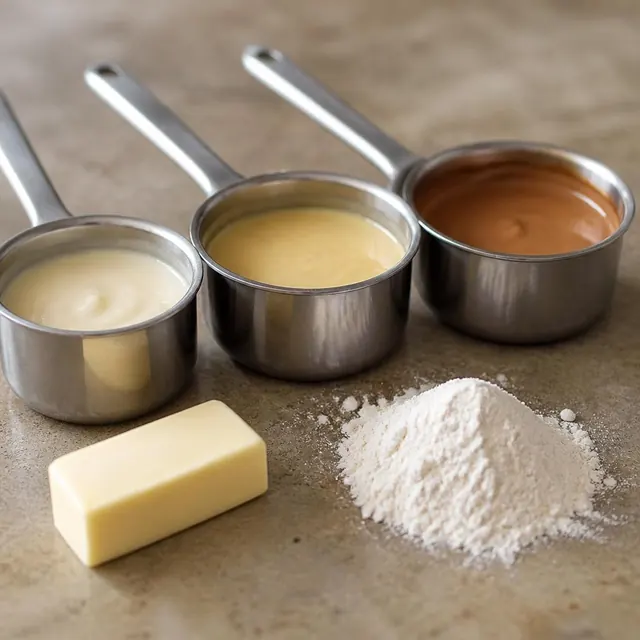
French roux, literally russet, has denoted a sauce of flour mixed into browned butter since 1762. From the same proportion of 8 oz (≈ 227 g) clarified butter to 9 oz (≈ 255 g) flour Escoffier makes three grades: white roux, cooked only a few minutes to remove the taste of raw flour; pale roux, taken off as soon as its colour starts to change; and brown roux, cooked to a light brown with a scent of hazelnut. He warned against fierce heat: burnt starch thickens poorly and makes the sauce bitter.
Recipes
Menus
Techniques and tips
Related entries
Sources
- Ústav pro jazyk český AV ČR: Slovník spisovného jazyka českého, heslo „jíška“
- Ústav pro jazyk český AV ČR: Slovník spisovného jazyka českého, heslo „zápražka“
- Ústav pro jazyk český AV ČR: Slovník spisovného jazyka českého, heslo „zásmažka“
- CNRTL / ATILF: Trésor de la langue française informatisé, étymologie „roux“
- Auguste Escoffier: A Guide to Modern Cookery (London 1907), č. 19 Brown roux, č. 20 Pale roux, č. 21 White roux
- DWDS – Digitales Wörterbuch der deutschen Sprache: Mehlschwitze