Meat cuts · International
Rump
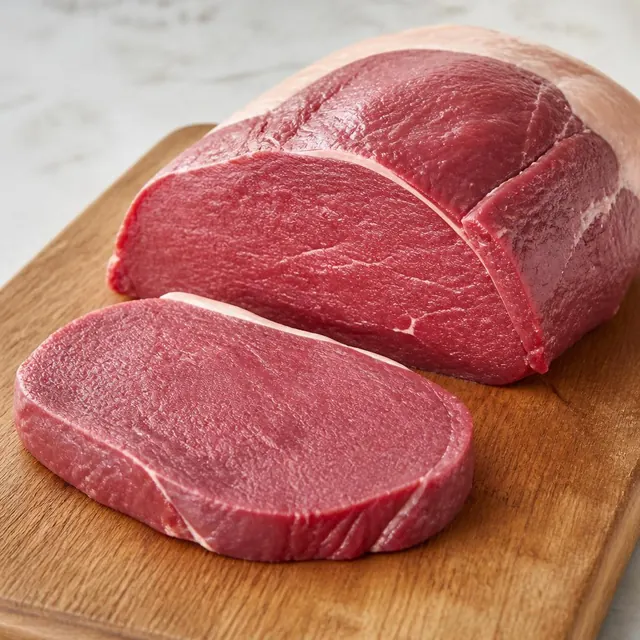
A separate muscle group of the beef leg, from the rump where the loin meets the leg – for large steaks, roast beef and braising.
At a glance
- Cut
- Hindquarter: the rump at the top, where the loin meets the leg, next to the striploin; a separate muscle group of the leg made up of several muscles.
- Ageing
- In retail often wet aged in vacuum packaging, for example 21–30 days.
- Production
- Separated from the leg along the seams as a separate muscle group; the neighbouring tabulová špička (picanha) belongs to the silverside.
- Use
- Large steaks, roast beef, steak tartare and carpaccio; in Czech cooking also braising and roasting.
- Substitutes
- For steaks striploin, for braising and roasting other parts of the leg.
Where on the animal
Beef
- Rump cap
An approximate diagram; butchers divide the carcass in slightly different ways from country to country.
Květová špička is a separate muscle group (šál) of the Czech beef leg, corresponding to the rump (German Hüfte). It lies at the top of the hindquarter where the loin meets the leg, joins the striploin and reaches the sacrum. Its several muscles have grain running in different directions.
From beef breeds it is a prized steak cut with fine veins of fat and a full flavour; in Austria the steaks are called Hüferlsteaks. The British rump steak, cut across the whole rump, can fall apart. Czech cooks often braise or roast it, but it also suits tartare and roast beef.
Picanha, rump cap and Tafelspitz come instead from the neighbouring tabulová špička: the fat-capped triangular top of the silverside, which British butchery counts as part of the rump. The name “rumpsteak” is confusing as well: in Czechia it covers the rump and the adjoining end of the striploin; the German Rumpsteak comes from the back.
Techniques and tips
Related entries
Sources
- Sdružení českých spotřebitelů a Česká technologická platforma pro potraviny: Jak poznáme kvalitu? Hovězí a vepřové maso (2012)
- AHDB Meat Purchasing Guide: Rump Cap (picanha), kód Rump B015
- AHDB Meat Purchasing Guide: Traditional Rump Steak
- Yumda Lexikon: Hüfte (Fleisch)
- Wikipedia (de): Tafelspitz (Fleisch)
- Yumda Lexikon: Schwanzstück
- Wikipedia (de): Rumpsteak
- Rohlík.cz: Steinhauser hovězí květová špička (rump steak) – popis produktu