Bread · Czech cuisine
Rohlík
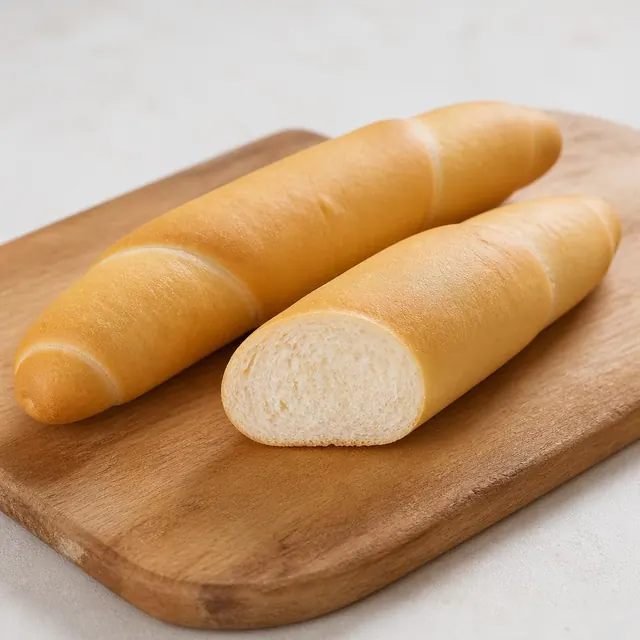
Rohlík – the everyday Czech wheat roll, counted among ordinary bakery wares low in fat and sugar.
At a glance
- Origin
- Czech Republic; classed as ordinary bakery ware (Decree No. 18/2020).
- Dough
- Wheat flour and further ingredients; under 8% anhydrous fat and 5% sugar on flour.
- Production
- Topped with salt, poppy seeds or caraway; sold fresh for at most 24 h after baking.
- Ratio
- Permitted negative weight tolerance for pieces up to 150 g: one piece at most −10%, ten pieces at most −6%.
Alongside bread and the houska, the rohlík is one of the most typical Czech bakery products. It is classed as ordinary bakery ware (běžné pečivo), which Czech Decree No. 18/2020 defines as products of wheat flour or other milled cereal products and further ingredients with less than 8% anhydrous fat and less than 5% sugar, relative to the weight of the milled products. In shops such wares may simply be labelled ‘pečivo’.
The top of a rohlík is often ‘dressed’ – sprinkled with salt, poppy seeds or caraway. The roll keeps only briefly; it may be sold as ‘fresh ordinary bakery ware’ only unpackaged, with production never interrupted by freezing, and for at most 24 hours after baking. Unpackaged rolls finished from a frozen semi-product must carry a visible note saying so.
The sweet rohlík and the Karlovy Vary rohlík, with about 18% margarine on flour weight in the recipe, already count as fine bakery wares (jemné pečivo).