Flours and grains · International
Basmati rice
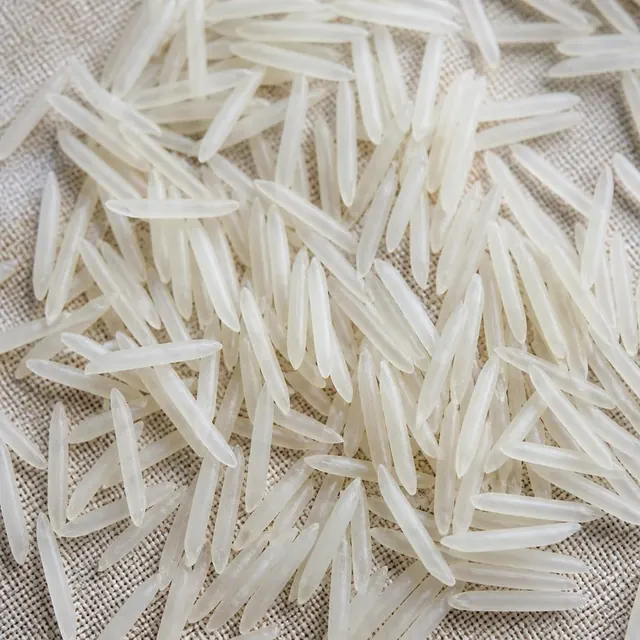
Aromatic long-grain rice from the Indo-Gangetic Plain whose slender grain lengthens markedly in cooking and stays separate.
At a glance
- Origin
- Indo-Gangetic Plain (India and Pakistan); geographical indication in India since 2016.
- Ratio
- Raw grain at least 6.5 mm, length-to-width ratio above 3.5, cooking elongation at least 1.7×, amylose 19–26 % (UK code 2022).
- Substitutes
- Jasmine rice (softer, milder aroma).
Basmati is the customary name for selected rice varieties grown only in defined areas of the Indo-Gangetic Plain on both sides of the India–Pakistan border. India registered basmati as a geographical indication in 2016. The voluntary UK code of practice of the Rice Association and the British Retail Consortium (2022 version) lists the varieties that may be called basmati and allows no more than 7 % other rice.
The same code sets minimum characteristics: an average raw milled grain length of at least 6.5 mm, a length-to-width ratio above 3.5, cooking elongation of at least 1.7 times, an intermediate amylose content of 19–26 % and the typical aroma. The key aroma compound of fragrant rice is considered to be 2-acetyl-1-pyrroline; its accumulation is linked to a recessive allele of the BADH2 gene on chromosome 8.
In tropical Asia aged rice is generally preferred: changes during the first months after harvest make the grain expand more in cooking and turn out fluffier and more separate.
Recipes
Techniques and tips
Related entries
Sources
- The Rice Association, British Retail Consortium: Code of Practice for Basmati Rice (2022)
- ICAR – Journal of Cereal Research 17(1): Bairwa a kol., Genetic Diversity in Aromatic Rice Varieties and Molecular Insights into BADH2 Gene Variability
- FAO/IRRI, B. O. Juliano: Rice in human nutrition, kap. 5 Post-harvest processing, parboiling (1993)
- Altroconsumo: Riso – come scegliere le varietà in base all'uso