Flours and grains · International
Jasmine rice
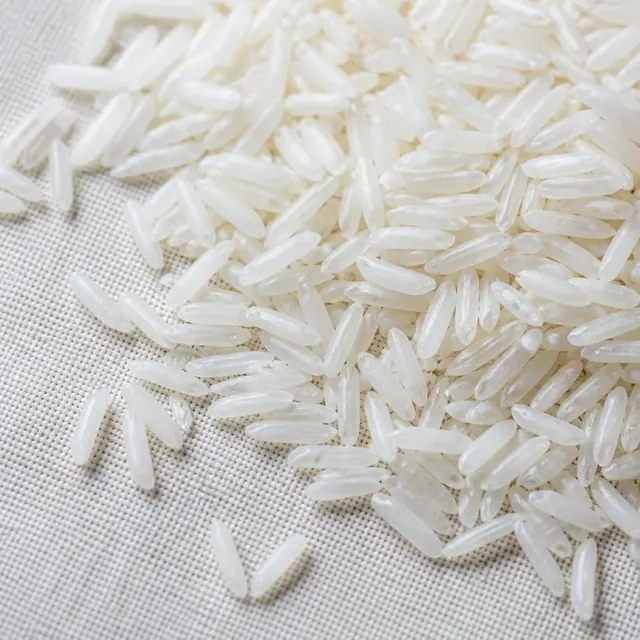
Thai fragrant long-grain Hom Mali rice with a low amylose content, soft when cooked.
At a glance
- Origin
- Thailand, varieties Khao Dawk Mali 105 and RD15; standard TAS 4000-2003.
- Ratio
- Amylose 13–18 %, husked grain at least 7.2 mm, length-to-width ratio at least 3.2 : 1, at least 92 % Thai Hom Mali in the pack.
- Use
- Side dishes and rice salads.
- Substitutes
- Basmati (fluffier, with a different aroma).
In Thailand jasmine rice is sold as Thai Hom Mali. The Thai Agricultural Standard TAS 4000-2003 of the Ministry of Agriculture, which builds among other things on a 2001 notification of the Ministry of Commerce, defines it as fragrant non-glutinous, photoperiod-sensitive rice grown as the main crop in Thailand from the varieties Khao Dawk Mali 105 and RD15.
Under the standard, the starch of white rice contains 13–18 % amylose, the husked grain is at least 7.2 mm long and the length-to-width ratio is at least 3.2 : 1. The fragrance depends on the age of the rice, and the cooked grain stays soft. White or brown rice sold under the name must contain at least 92 % Thai Hom Mali.
It differs from basmati mainly in its lower amylose – basmati has 19–26 % – which is why jasmine rice is softer and more tender, while basmati stays separate.