Kitchen terms · Italian cuisine
Al dente
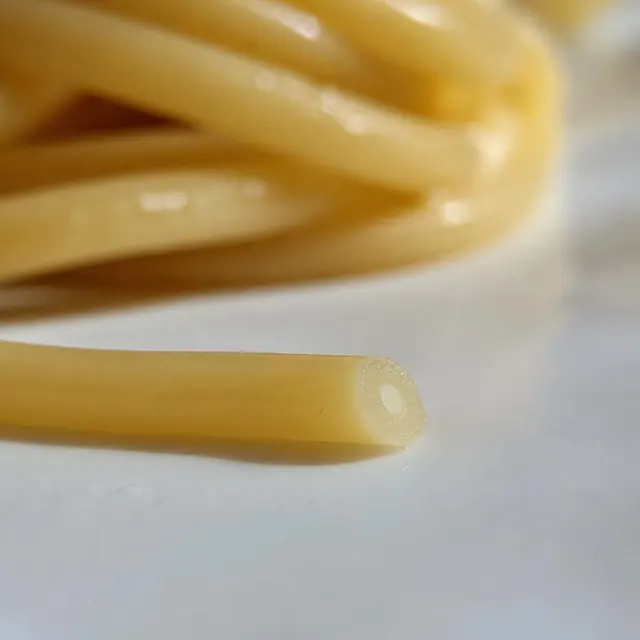
Italian term for pasta or rice cooked so that it still offers slight resistance to the bite.
At a glance
- Origin
- Italy: a + il + dente, literally “to the tooth”.
- Production
- Cooking stops when the pasta or rice still offers slight resistance at the centre.
- Use
- Pasta and rice, for example risotto.
- Substitutes
- German bissfest; the opposite is overcooked, mushy pasta.
Al dente literally means “to the tooth”. The German dictionary DWDS breaks it down into Italian a, to, il, the, and dente, tooth. The Treccani dictionary lists it as an adverbial phrase for pasta or rice served with the cooking not quite completed. DWDS glosses it as “bissfest”, firm to the bite and not cooked fully soft.
The Oxford and Cambridge dictionaries both describe al dente as food, especially pasta, that is still firm and not too soft when bitten. DWDS and Treccani apply it mainly to pasta and rice.