Meat cuts · International
Flank steak
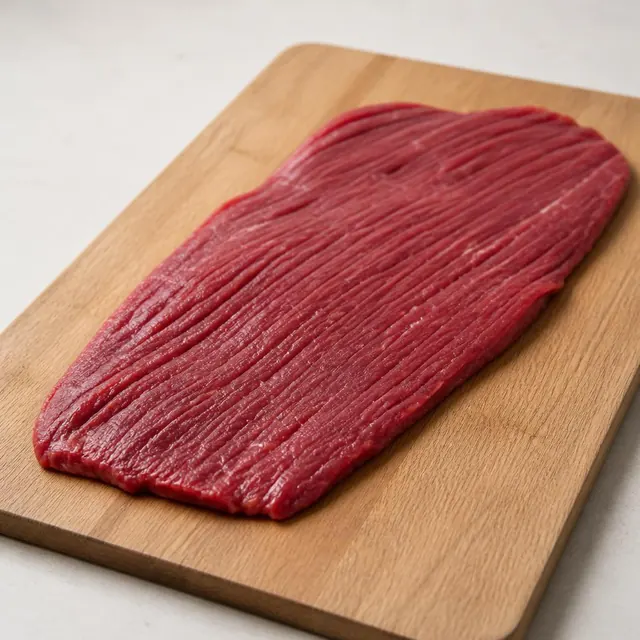
A flat, lean steak from the abdominal wall with coarse grain and full flavour – for marinades, the grill and thin slices.
At a glance
- Cut
- Hindquarter: abdominal wall in the lower flank behind the ribs, below the loin and in front of the leg; hard-working muscles.
- Production
- One boneless piece or portioned into smaller steaks; sliced across the grain.
- Use
- Marinate, then grill or sear quickly to medium rare and serve thinly sliced.
- Substitutes
- Skirt steak from the diaphragm or hanger steak.
Where on the animal
Beef
- Flank
An approximate diagram; butchers divide the carcass in slightly different ways from country to country.
Flank steak is a flat, lean steak from the abdominal wall; it lies in the hindquarter, in the lower part of the flank behind the ribs (behind the plate), below the loin and in front of the leg. It comes from muscles that support the weight of the abdominal organs and work hard in life, which gives it a coarse, pronounced grain and a full beefy flavour.
It is sold as one large piece or portioned into smaller steaks. It benefits from a marinade or mechanical tenderising and is best grilled or seared quickly over high heat to medium rare, then sliced thinly across the grain.
It is used for fajitas, carne asada or London broil, and also for fried noodles. It is often confused with skirt steak, which comes from the diaphragm. In Argentina and Uruguay it is called vacío, in Brazil vazio, in Spain falda and in Colombia sobrebarriga.