Kitchen terms · International
Braising
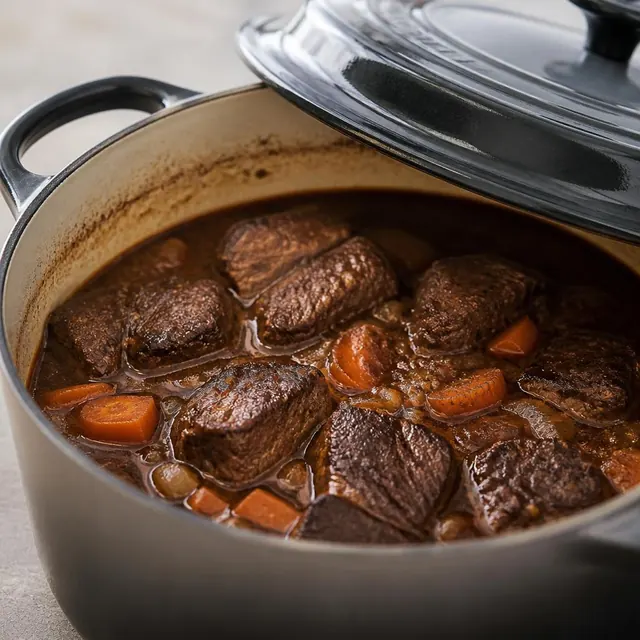
Slow cooking in a covered vessel with a small amount of liquid, typical for tougher meat, vegetables, rice and even fruit.
At a glance
- Origin
- Fr. braiser (1767) from braise – embers; the Czech culinary sense of dusit is listed in the SSJČ.
- Production
- Meat or vegetables, often browned first, cook slowly under a lid in a small amount of liquid.
- Ratio
- Review of meat cooking (Foods 2023): collagen denatures at about 53–63 °C and turns to gelatin at higher temperatures over longer times.
- Use
- Tougher cuts of beef and mutton, poultry, vegetables, rice, liver and fruit.
- Substitutes
- Sautéing is brief cooking in fat without a lid or added liquid.
The standard dictionary of literary Czech defines the culinary sense of dušení as cooking in a covered vessel with a small amount of liquid. Its examples include rice, beef on vegetables, liver and apples, and one example sentence notes that beef needs longer braising than veal.
French braiser is recorded from 1767 and derives from braise, glowing embers: it first meant cooking over live coals, and in 1835 the Académie defines it as cooking meat in a vessel called a braisière. German schmoren, according to the DWDS, means letting meat or vegetables finish slowly in a covered pot with a little liquid after browning.
Escoffier considered braising the most demanding and most expensive of all kitchen methods. He recommended meat from mature animals, beef from animals three to six years old, moistened with good brown stock. According to a review on cooking meat, collagen denatures at about 53–63 °C and at higher temperatures gradually turns into gelatin; in braising this takes hours. As an animal ages its collagen grows more heat-stable.
Recipes
Menus
Techniques and tips
Related entries
Sources
- Ústav pro jazyk český AV ČR: Slovník spisovného jazyka českého, heslo „dusiti“
- CNRTL / ATILF: Trésor de la langue française informatisé, étymologie „braiser“
- DWDS – Digitales Wörterbuch der deutschen Sprache: schmoren
- Auguste Escoffier: A Guide to Modern Cookery (London 1907), č. 247 Ordinary braisings
- Foods 12 (2023): Sous-Vide as an Alternative Method of Cooking to Improve the Quality of Meat: A Review